VINATAP JOURNAL
Coco Coir for Hydroponics: Choosing Grade, Buffering and Format
How to choose coco coir for hydroponics: washed or buffered grade, EC and pH limits, particle size, formats and checks on arrival.
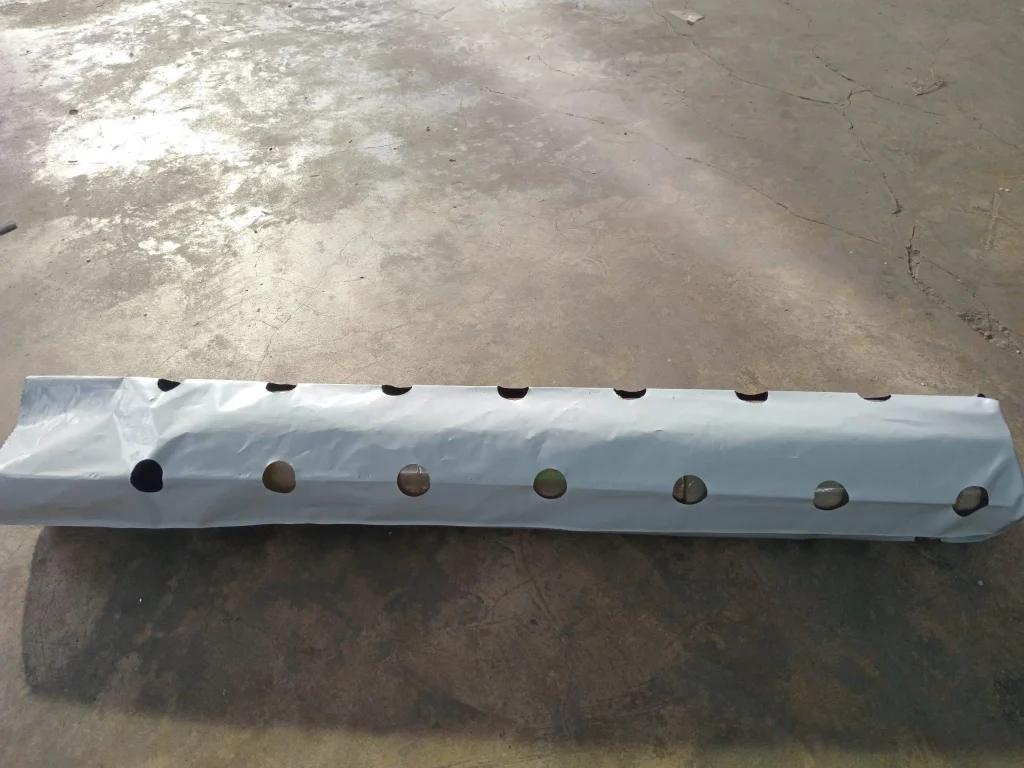
Coco coir works in hydroponics because it holds a lot of water while keeping air around the roots, and it starts close to the pH most crops are fed at. Growers use it in grow bags, slabs and pots under drip irrigation. Washing and buffering are two important checks. Also verify the agreed physical specification, prepared volume, water quality and crop-specific acceptance requirements before planting.
| What to check | What to ask for |
|---|---|
| Salts (EC) | Washed coir with a stated EC limit and test ratio |
| Potassium and sodium held on the coir | Buffered coir, for crops on a complete nutrient solution from day one |
| pH | 5.5–6.5 for washed and buffered grades |
| Particle size | Fine pith for water holding; husk chips for air |
| Format | Grow bags, slabs or blocks |
Why growers use coir
The University of Florida’s guide to hydroponic media rates coir high for water holding. Fine coir holds the most water, while chunky coir has more pore space, drains better and gives high aeration. Coir has a pH of 5.5–6.8 and is renewable (UF/IFAS Extension).
Which systems it suits
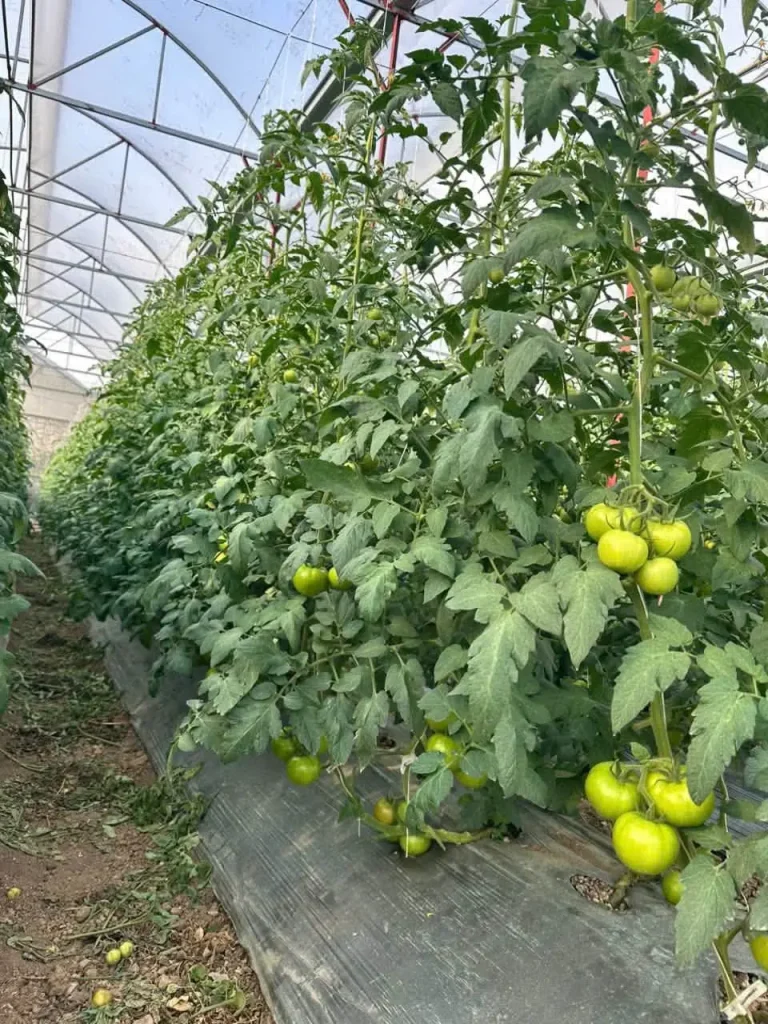
The same guide advises against using fine or chunky coir in recirculating systems, because particles can clog the equipment. Coir is at home in systems where the nutrient solution passes through the medium once: bags, slabs and pots fed by drippers.
Washing and EC
High salt levels are common in coir, and it should be washed before use (UF/IFAS Extension). EC, electrical conductivity, shows how much dissolved salt the medium holds (UMass Extension).
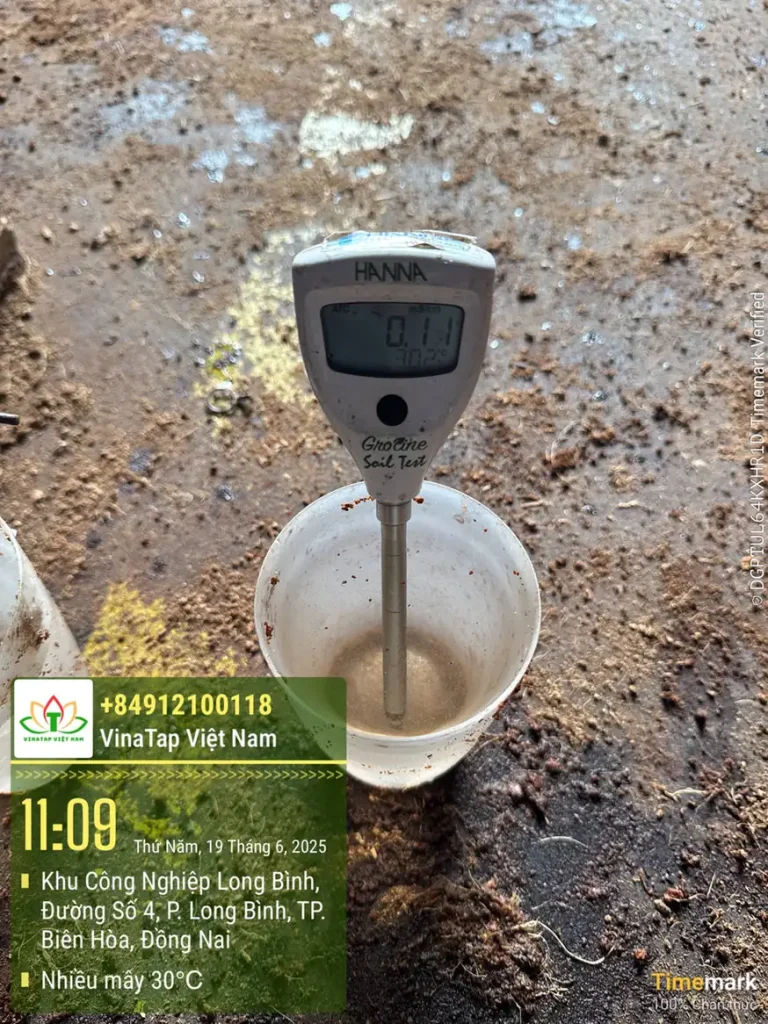
At VinaTap, cocopeat goes through four cycles of soaking and pressing, with 1 m³ of fresh bore-well water for every 1 m³ of cocopeat. Washed grades are released at an EC below 0.4 mS/cm, measured on a 1:1.5 extract by volume. See low EC cocopeat and cocopeat EC testing methods.
Buffering
Washing removes dissolved salts. Untreated coir pith also carries high levels of potassium and sodium (Ranaweera, Dharmakeerthi and Gunasena, 2015), and coir can hold nitrogen, potassium and phosphorus, which affects the fertilizer program (UF/IFAS Extension).
Buffering deals with this before the coir reaches the crop. VinaTap treats washed cocopeat with calcium nitrate, with magnesium on request, holds it for 24 hours, rinses it three more times and dries it to 15% moisture. At least 100 tons of buffered coco coir is kept in stock. Washed vs buffered cocopeat explains when each grade is enough.
Particle size and blends
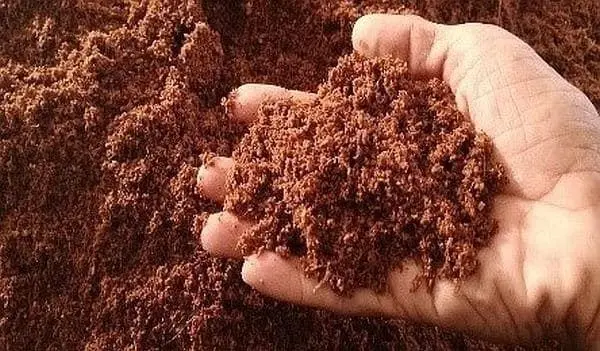
Cocopeat pith measures 0.1–6 mm and holds the most water. Husk chips of 5–50 mm open the medium and speed drainage. The ratio of pith to chips is set to the crop and the irrigation plan, and VinaTap mixes custom blends with automatic dosing.
Formats
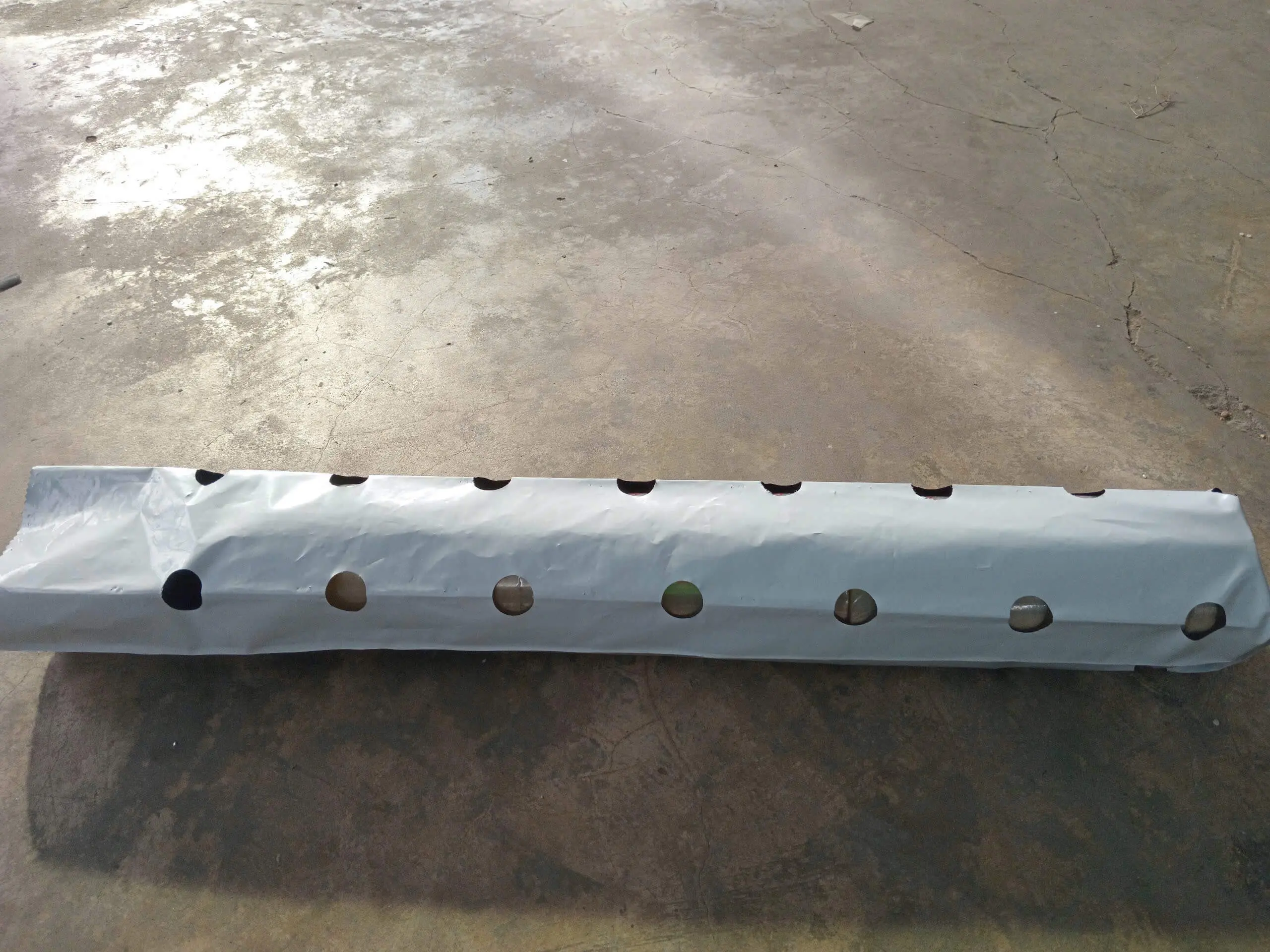
- Grow bags: 100 cm long and 12–30 cm wide, in compressed or uncompressed form. Compressed bags are expanded with water at the greenhouse.
- 5 kg blocks: each expands to 70–75 L, for filling pots or bags on site.
- Big bales: 10,000 and 12,000 L per bale, for large operations.
Compressed coir needs soaking before use (UF/IFAS Extension). Hydrate it fully before planting.
Checks on arrival
- Take a sample from several units and measure EC and pH at the ratio named in the specification.
- Compare the result with the limit agreed in the order.
- Hydrate one unit and check the expanded volume.
Common questions
Is coco coir good for hydroponics?
Yes, for systems where the solution passes through the medium once. It holds water and air well and has a pH of 5.5–6.8. It must be washed, and university guidance advises against it in recirculating systems.
Does coco coir need to be buffered for hydroponics?
For crops fed a complete nutrient solution from the first irrigation, buffered coir is the safer choice, because buffering replaces potassium and sodium held on the coir with calcium. Washed low EC coir is enough for many other uses.
What EC should coco coir have for hydroponics?
Ask for a stated limit and the test ratio. VinaTap’s washed and buffered grades are below 0.4 mS/cm on a 1:1.5 extract by volume.
Request Samples & a Bulk Quote
For a ready-blended medium, see coco perlite mix 70/30 in 50 L bags, and for the growing method read Growing in coco: buffered coco coir and 70/30 coco perlite.
Ask about a product in this article
We have included this page in your enquiry. Add your product specification, quantity and destination port before sending.