VINATAP JOURNAL
Cocopeat EC Testing: Methods, Units and Meaningful Results
A low EC number is useful only when the extraction method is known. Learn how to compare cocopeat reports, avoid sampling errors and turn laboratory results into practical purchasing and growing decisions.
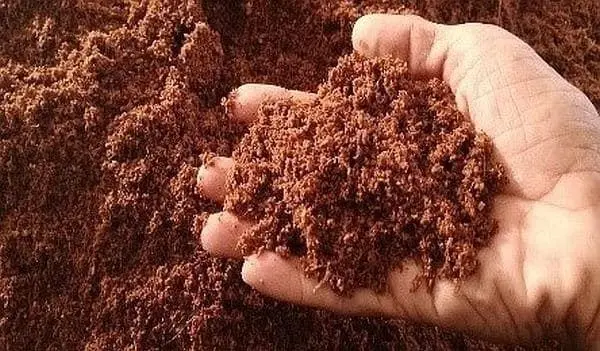
Two cocopeat suppliers report different electrical conductivity values. The lower number looks attractive, yet it may have been produced using a more dilute extract. Before ranking either material, establish what was measured, how it was extracted and whether the samples represent the same product condition. Cocopeat EC testing is most useful as a documented measurement system, rather than a single pass-or-fail figure.
What EC reveals, and what it leaves unanswered
Electrical conductivity describes how readily a solution carries an electrical current. Dissolved ions contribute to that response. It is therefore a useful indicator of overall soluble salts, but it does not identify the individual ions. A fertilizer solution and an extract containing unwanted sodium or chloride can produce similar readings while creating different management questions.
Purdue Extension explains the role of pH and EC monitoring and the need for additional analyses to determine individual nutrient concentrations. For a buyer, the practical implication is straightforward: use EC to screen and trend a batch, then request an ion analysis when the intended crop or water system makes composition important.
Keep pH, EC and buffering status as separate specification lines. A suitable pH does not establish low salinity. A low soluble-salt reading does not establish that the coir has received a calcium-based exchange treatment. Our guide to washing and buffering explains that distinction.
Identify the extraction method before comparing numbers
Soilless media are commonly assessed through a 1:2 dilution, a saturated media extract, or a PourThru extraction from a planted container. These procedures create different test solutions. UMass Extension specifically cautions against applying one method’s interpretation ranges to another method.
| Result type | What to clarify | Useful application |
|---|---|---|
| Defined dilution extract | Material-to-water ratio, volume or mass basis, sample preparation and equilibration | Comparing incoming lots tested by the same procedure |
| Saturated media extract | How saturation was established and which laboratory procedure was used | Laboratory assessment interpreted against matching guidance |
| PourThru extract | Container condition, irrigation timing, added water and collected sample | Following root-zone trends in an established crop |
| Direct substrate sensor | Whether the device reports bulk or pore-water EC, calibration and moisture conditions | A calibrated monitoring programme, rather than an automatic substitute for a laboratory extract |
Do not convert between extraction methods by multiplying by the dilution ratio. Extraction also depends on how much water was already in the material and which salts enter solution during the procedure. A valid unit conversion changes how the same measurement is expressed; a different extraction changes the measurement itself.
Separate unit conversion from method conversion
The following is a unit-equivalence example, not a recommended crop target: 0.50 mS/cm = 500 µS/cm = 0.50 dS/m = 50 mS/m. A report showing 500 µS/cm and another showing 0.50 mS/cm can describe the same conductivity, provided their extraction and temperature reference also match.
By contrast, a meter’s “ppm” display may apply an instrument-specific factor to conductivity. Ask which conversion factor is selected. Do not treat that calculated display as a laboratory determination of total dissolved solids or of a particular nutrient.
A comparison that should stop a purchasing decision
Consider a hypothetical enquiry. Supplier A reports 0.40 mS/cm using a defined 1:5 extract. Supplier B reports 0.65 mS/cm using a defined 1:2 extract. These invented values are not VinaTap specifications. They illustrate why “A is cleaner” is an unsupported conclusion: the preparation methods differ.
A better next step is to divide representative material from each lot into matched samples and have one laboratory use the same agreed procedure. If those comparable results still differ, investigate the relevant ions, processing history and suitability for the intended use. There is no need to force a universal conversion from the original two figures.
Build a repeatable sampling and measurement record
For incoming blocks, agree a batch sampling plan with the supplier or laboratory before testing. Record the lot code, how the blocks were selected, their condition and whether the material was reconstituted. For an established crop, keep different irrigation zones or visibly different plant groups identifiable rather than mixing all evidence into one average.
For physical samples from planted containers, define the sampled depth as well. Avoid collecting only the surface layer, where salts can accumulate differently from the active root zone. Agree a representative full-depth or active-root-zone sampling approach with the laboratory, and use it consistently in later comparisons.
UConn’s laboratory guidance stresses representative sampling and consistent protocols. It also notes that differences between laboratory procedures can affect the results. A repeatable history from one agreed procedure is usually more informative than a folder of unrelated readings.
- Confirm the extraction method and its exact preparation instructions.
- Check the meter with an appropriate conductivity standard; record the temperature compensation or reference temperature.
- Use the specified extraction water and clean equipment. Record the water blank where the procedure calls for it.
- Keep contact time, mixing, filtration and measurement timing consistent with the chosen method.
- Retain individual replicate readings. Investigate an unusual spread instead of reporting only the most favourable value.
- Compare the result with a limit defined for that method, product condition and application.
Write an EC specification a laboratory can reproduce
A useful request states: product format; application; agreed EC method; units and temperature basis; sampling approach; the acceptance limit; and whether sodium, chloride, potassium, calcium or magnesium must be reported separately. Also distinguish an uncharged incoming substrate from a planted, fertilized root zone. Their numbers answer different questions.
When discussing Low EC cocopeat, send the test method with the required limit. VinaTap can discuss the grade, format and buyer specification without treating one unqualified EC number as a complete quality guarantee.
Sources and further reading
- Purdue Extension: pH and Electrical Conductivity Measurements in Soilless Substrates.
- UMass Extension: Soil Testing for Greenhouse and Floriculture.
- UConn: Interpretation of Saturated Media Extract Results for Greenhouse Media.
Ask about a product in this article
We have included this page in your enquiry. Add your product specification, quantity and destination port before sending.