VINATAP JOURNAL
Washed vs Buffered Cocopeat: Cation Exchange, Calcium and Magnesium
Understand why washing and buffering solve different problems in cocopeat. Learn how exchange sites affect calcium, magnesium and potassium, interpret laboratory evidence, and compare preparation costs before selecting a substrate for your growing system.
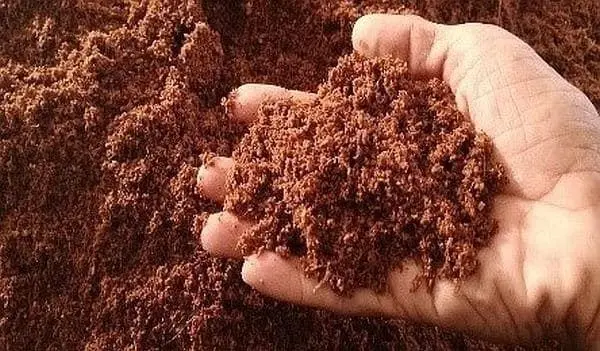
A low electrical conductivity reading can make two cocopeat samples look equivalent while concealing an important difference: which nutrients occupy their exchange sites. For a grower establishing a fertigation program, washed and buffered cocopeat answer different questions. The purchasing decision should connect soluble salts, exchange chemistry, irrigation water and the cost of preparation.
Washing removes soluble salts; buffering conditions exchange sites
Washing carries away salts dissolved in water. Coir also has negatively charged sites that reversibly retain positively charged ions, including potassium, sodium, calcium and magnesium. Cation exchange capacity, or CEC, describes the quantity of exchangeable charge; it does not describe which ions currently occupy that capacity. Verhagen’s study of coir from 17 sources examined these exchangeable ions and the influence of washing-water quality. A water extract and an exchangeable-cation analysis therefore answer different questions. Read the ISHS research on coir CEC and adsorption-complex saturation.
In coir processing, buffering generally means conditioning exchange sites with calcium, sometimes alongside magnesium. Displaced sodium and potassium must then be managed through the treatment and rinsing process. Buffering changes site occupancy; it neither switches off CEC nor simply adjusts pH. Poulter’s treated-versus-untreated coir research describes calcium-based treatment followed by washing, and reports different flower-production outcomes in a protected gerbera trial. Those results support evaluating treatment, but cannot predict another crop’s yield or financial return. See the ISHS treatment study.
Why calcium and magnesium need separate attention
Consider establishment as a negotiation between the feed solution and the substrate. If calcium supplied at planting occupies sites previously carrying potassium, the solution reaching roots can differ from the fertilizer recipe. The useful question is not whether exchange happens, but whether its direction and magnitude disrupt the intended nutrient balance.
Do not treat magnesium as automatically covered by a calcium-treatment label. Ask whether magnesium was included, what the incoming water contributes, and what the finished material’s analysis shows. Equally, adding a supplement without testing can obscure the original problem. A high-potassium result, inconsistent irrigation delivery and unsuitable water each call for different investigations.
Keep EC and pH in their proper roles. EC indicates overall dissolved-ion conductivity rather than individual nutrient balance; pH describes acidity. Neither identifies exchange-site occupancy. NC State’s substrate guide distinguishes CEC from soluble-salt measurement and explains why a fuller analysis is needed to identify nutrient imbalance. See its sections on nutrient retention and soluble salts.
A hypothetical exchange-charge calculation
The following is an invented accounting example, not a VinaTap analysis or treatment recipe. Suppose exchangeable potassium falls by 4 cmol of charge per kilogram of dry coir, while calcium and magnesium occupancy increase as shown. The ledger assumes those are the only changing exchangeable ions.
| Exchangeable ion | Charge change | Corresponding elemental mass |
|---|---|---|
| Potassium, K+ | −4 cmolc/kg | −1.56 g/kg |
| Calcium, Ca2+ | +3 cmolc/kg | +0.60 g/kg |
| Magnesium, Mg2+ | +1 cmolc/kg | +0.12 g/kg |
One cmolc is 0.01 mole of charge. The potassium decrease is therefore 0.04 mole of potassium; the calcium increase is 0.03 divided by two, or 0.015 mole. Magnesium likewise requires division by two. Charge balances at four cmolc in each direction, although elemental masses differ.
This arithmetic illustrates why comparing grams of calcium with grams of potassium is misleading. It cannot calculate a soaking dose: real treatment also involves soluble ions, other exchangeable ions, solution volume, contact conditions and subsequent rinsing. Never convert this ledger directly into fertilizer additions.
Choosing between washed and buffered material
Buy the preparation you can verify
A nursery with limited conditioning space may value documented, consistent preparation more than a lower block price. An operation with suitable water, trained staff and batch-testing capacity may assess a washed product differently. Compare total preparation cost: labor, water, drainage handling, testing, storage time and rejected batches belong beside freight and purchase price.
When reviewing low-EC cocopeat, request the extraction method and treatment status separately. A low-EC label is not proof of buffering. Likewise, a buffered label is not a complete fertigation plan. Agree what must be demonstrated at shipment and what will be verified after hydration at your facility.
Evaluate the complete system
For a pilot, separate two objectives. First compare chemical behavior under identical inputs. Then optimize management for each acceptable material. Changing the feed recipe, irrigation frequency and coir lot simultaneously makes a disappointing result difficult to diagnose. Retain a reference lot and record every adjustment before expanding the trial.
A practical testing checklist
- Sample several packages from the identified lot; retain an untouched reference sample and record storage conditions.
- Obtain irrigation-water results, including calcium, magnesium, sodium and alkalinity, before interpreting substrate behavior.
- Specify EC and pH extraction methods, units, dilution and sampling time. Compare like methods rather than raw numbers from unlike tests.
- Ask a competent laboratory for soluble potassium, sodium, calcium and magnesium, plus exchangeable-cation testing when the diagnosis requires it. Confirm dry-mass or volume reporting bases.
- Run a small establishment trial with recorded feed inputs and consistent root-zone sampling. Include several replicates rather than trusting one pot.
- Review nutrient results alongside irrigation uniformity, drainage, roots and tissue analysis when appropriate; define acceptance criteria with your crop adviser.
This is general growing-media guidance, not a promise about any VinaTap shipment. To discuss a documented supply specification, send VinaTap your crop, water analysis, treatment requirements and testing method. Ask for lot-specific evidence rather than assuming one process description represents every grade.
Sources
- Verhagen, 1999: CEC and the Saturation of the Adsorption Complex of Coir Dust. ISHS, DOI: 10.17660/ActaHortic.1999.481.14.
- Poulter, 2014: Quantifying Differences Between Treated and Untreated Coir Substrate. ISHS, DOI: 10.17660/ActaHortic.2014.1018.61.
- NC State Extension: Container Soils and Soilless Media. Chemical-property principles; numerical management recommendations are not adopted here.
VinaTap grade selection: Low EC, High EC or Buffered?
Choose the processing grade separately from the package. A block, brick or loose bag describes delivery; it does not prove that the coir has been washed or buffered.
Low EC: washed cocopeat
VinaTap’s confirmed Low EC specification is EC below 0.4 mS/cm using a 1:1 extraction by volume: one part cocopeat to one part water. Record the water used and the sampling procedure on the inspection report. This incoming-material limit is not a target for fertilized root-zone solution, and it cannot be compared directly with a result from another extraction ratio.
High EC: unwashed cocopeat
High EC cocopeat is supplied unwashed. Evaluate it for the intended landscaping, mature-plant or bedding application and agree the lot’s acceptance criteria. There is no single published High EC threshold here. Do not substitute it for a nursery grade solely because the particle appearance is similar.
Buffered: treatment agreed with the buyer
VinaTap can use calcium nitrate and magnesium when buffering is requested. Specify whether the order requires both, and request confirmation of the treatment and finished-material checks. Buffering is an additional preparation requirement, not a replacement for the crop’s fertilizer program.
Confirmed dry-grade properties and their limits
For VinaTap’s Low EC, High EC and Buffered dry cocopeat grades, the confirmed pH range is 5.5–6.5, measured at 1:1; packing moisture is below 15%, checked with a dedicated meter; and minimum expansion is 14 L/kg. Agree sampling, moisture basis and expansion procedure for the purchase contract. These dry-grade values do not describe directly filled moist grow bags.
Peat particles are 0.1–6 mm. Particle structure and chemical treatment are separate choices: discuss both when ordering custom coco substrates.
A buyer’s decision sequence
- State the crop or non-growing use and how the medium will be prepared.
- Provide water analysis and the intended feeding system where applicable.
- Select treatment, particle structure and delivery format separately.
- Agree comparable EC testing methods, lot identification and acceptance criteria.
- Run a representative trial before committing the whole growing area.
Common questions about cocopeat grades
Does Low EC mean buffered?
No. Washing and buffering address different parts of substrate preparation. Ask for treatment status as well as the EC test method.
Can the same grade be supplied in different packages?
Discuss blocks, bricks, bags and custom formats with VinaTap. Confirm the selected grade on the order rather than inferring it from package size.
Request a grade-specific cocopeat quotation with your application, treatment, test method, packing and destination.
VinaTap processing: washing, buffering and mechanical drying
VinaTap separates washing, requested calcium–magnesium buffering and drying into distinct processing requirements. Low EC cocopeat is washed; High EC remains unwashed. The factory reports a biomass-fired stainless-steel rotary drum, 1.6 m in diameter and 22 m long, and dry cocopeat packing moisture below 15%. State the treatment and finished-product tests on the purchase specification.
Review the VinaTap washing, optional buffering and rotary drying process and historical SGS and Vinacontrol sample results. Agree current lot testing where it forms part of your order acceptance.
Ask about a product in this article
We have included this page in your enquiry. Add your product specification, quantity and destination port before sending.