VINATAP JOURNAL
Exporting Cocopeat to Australia and New Zealand: Biosecurity Requirements
What Australia and New Zealand require for coco peat imports: permits, clearance options, accepted heat treatments and the documents a manufacturer supplies.
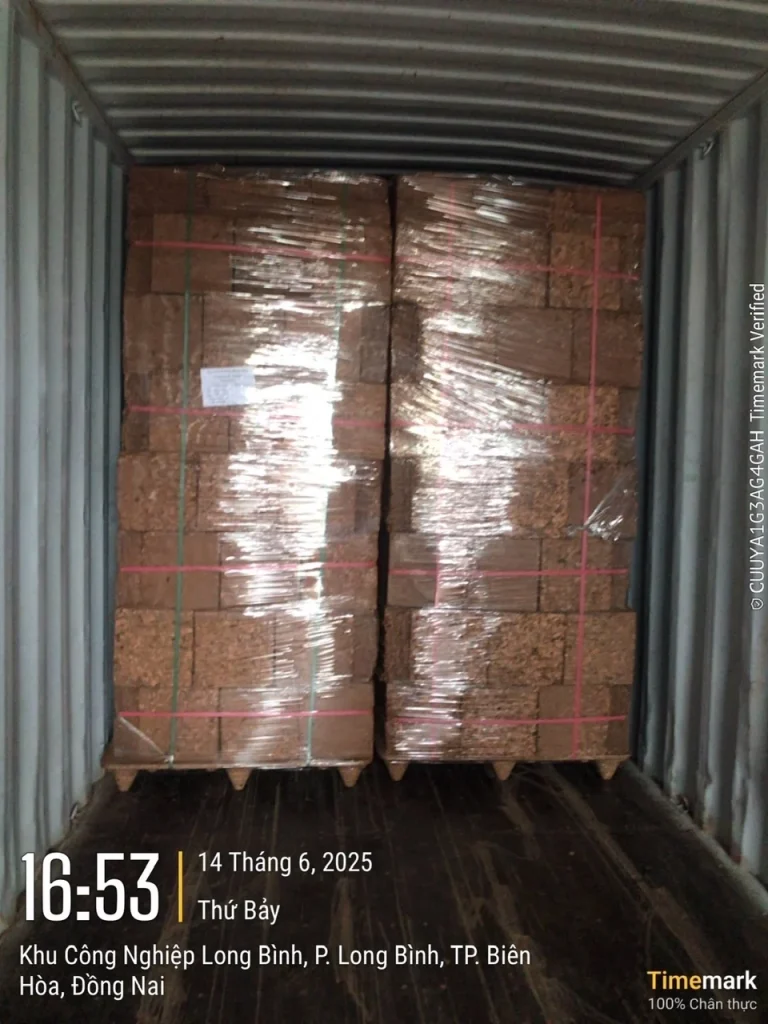
Australia and New Zealand apply some of the strictest plant-health rules in the world to coco peat. Both treat it as a biosecurity risk good, and both look for the same four contaminants: viable seeds, live insects, soil and animal material. New Zealand requires a phytosanitary certificate and one of six clearance options. Australia requires an import permit and a production questionnaire from the manufacturer.
VinaTap has shipped full containers of cocopeat to both countries. This guide sets out what each authority asks for and which documents the manufacturer supplies. Coco peat, cocopeat, coir peat and coir pith are names for the same material.
| Point | Australia | New Zealand |
|---|---|---|
| Authority | Department of Agriculture, Fisheries and Forestry | Ministry for Primary Industries (MPI) |
| Where the rules are | BICON, under the coir peat case | Import Health Standard: Fertilisers and Growing Media of Plant Origin |
| Import permit | Required for plant-based fertilisers, potting mixes and soil conditioners | Not required for coco peat |
| Main document from the manufacturer | Production questionnaire | Manufacturer’s or treatment certificate, for the treatment options |
| Phytosanitary certificate | As set by the BICON case and permit | Required |
New Zealand: the import health standard
Coco peat enters New Zealand under MPI’s Import Health Standard for Fertilisers and Growing Media of Plant Origin. The version cited here came into force on 13 May 2025 (MPI, IHS.FERTGRO). An earlier amendment removed the permit requirement for coco peat.
How the coco peat must be produced
- Production must avoid contamination with viable seeds, live regulated arthropods, soil and animal material.
- Traditional retting in open troughs or ponds must not be used.
- Bore water must be used for washing or rinsing.
- Drying areas must be kept from contact with soil, with a plant-free buffer of 3 metres around them unless concrete walls stand on the edge of concrete pads.
At VinaTap, washing water comes from the factory’s own industrial bore well, which is 150 m deep. Crushing, washing, drying and block pressing all take place inside the production building.
The phytosanitary certificate
Every consignment needs a phytosanitary certificate from the plant-health authority of the exporting country. Before issuing it, the authority must inspect the consignment and be satisfied that it is free from viable seeds, live regulated arthropods, soil and animal material.
Six ways to clear a consignment
The importer chooses one option and states it on the import documents.
| Option | What happens |
|---|---|
| 1. Grow-out test before export | The exporting authority samples the product and tests it for viable seeds. The result is declared on the phytosanitary certificate. |
| 2. Grow-out test in New Zealand | The consignment is held at an approved transitional facility while MPI samples it and grows the samples for three weeks. |
| 3. Grow slabs and grow bags held in a facility | The goods are used or held at an approved transitional facility for at least nine months. |
| 4. Treated before export | The product is treated by moist heat, dry heat, autoclaving or irradiation, and the treatment is recorded on the phytosanitary certificate or a treatment certificate. |
| 5. Sterilised during manufacture | The same treatments apply. A manufacturer’s certificate must record the core temperature reached and the time it was held. |
| 6. Treated in New Zealand | The consignment is treated at an approved transitional facility by moist heat, dry heat or autoclaving. |
Treatments MPI accepts
- Moist heat: core temperature of at least 85 °C for 15 hours, or 100 °C for 25 minutes, at 40% relative humidity.
- Dry heat: core temperature of at least 110 °C for 16 hours, 121 °C for 2 hours, 154 °C for 30 minutes, 193 °C for 4 minutes or 221 °C for 2 minutes.
- Autoclaving: core temperature of at least 120 °C for 30 minutes at 100 kPa.
- Irradiation: at least 25 kGy.
Fumigation is not on this list. All temperatures are core temperatures of the product, not readings of the air or of the equipment.
What the manufacturer’s certificate must show
MPI asks for the certificate on company letterhead, signed by an authorised person, with that person’s name, job title and the date of issue. It must identify the product and give the processing and treatment details, including core temperature and duration, and the date of manufacture.
Australia: BICON and the import permit
Australia publishes import conditions through its Biosecurity Import Conditions system (BICON). The Department of Agriculture, Fisheries and Forestry directs importers of coir peat for growing media, mulch or fertiliser to the BICON Coir peat case. Its DAFF guidance states that plant-based fertilisers, potting mixes and soil conditioners require an import permit. Match the exact product, ingredients and end use to the applicable BICON pathway before deciding which permits and documents apply.
Australia only: identify the exact product before placing an order
- 100% cocopeat: State whether it is loose or compressed, the country of origin and what it will be used for. Declare the actual treatment and packing. Ask your importer to confirm the matching BICON pathway.
- Cocopeat blends: If the product contains perlite or any other added material, list each ingredient and its proportion. Check the applicable pathway for that formulation; do not carry over a decision or permit from a different product.
- Before shipment: Confirm the current conditions with your Australian importer for the exact shipment, including any permit, certificates, treatment and packaging evidence required. Share the agreed formulation, order size and destination with VinaTap so the production and packing documents can be prepared against the same specification.
Request a quotation for the exact product. Include the ingredients, package size, intended use and Australian destination.
The production questionnaire
Where the relevant pathway requires a production questionnaire, the manufacturer completes it and the importer attaches it to the permit application. The department sets the import conditions from the answers. The June 2026 form asks for (production questionnaire):
- each ingredient, its origin and its share of the product
- the manufacturing process, with a flow chart
- any heat treatment, with minimum core temperatures, hold times and the water content before and after heating
- the source of process water and any treatment applied to it
- packaging, which must be clean and new
- evidence of a quality system, or a description of internal quality control
Each manufacturing site completes its own questionnaire, and supporting documents must be signed and dated within six months of the application. Check the coir peat case in BICON for the conditions in force on the day you apply.
VinaTap has completed this questionnaire for importers in Australia. They obtained their import permits with it and buy from us today.
Pallets and packaging for Australia
Australia’s packing declaration rules list compressed non-timber material, including agricultural waste, as unacceptable packaging, and require solid timber packaging to be treated (packing declaration fact sheet, December 2024). VinaTap ships goods to Australia on treated wood pallets or plastic pallets. See ISPM 15 and compressed wood pallets for the detail.
What VinaTap supplies for these two markets
- Manufacturer’s certificate. It identifies the product, the quantity and the quality limits for the consignment, and describes the drying step.
- Treatment certificate. It records the type of treatment, the equipment, the dates and the place of treatment.
- Phytosanitary certificate from the Vietnamese plant-quarantine authority.
- Production questionnaire for Australian permit applications, completed for the manufacturing site.
Our consignments to New Zealand have cleared under the heat-treatment route. The cocopeat is dried with hot air in the rotary drum dryer and travels with VinaTap’s manufacturer’s certificate and treatment certificate.
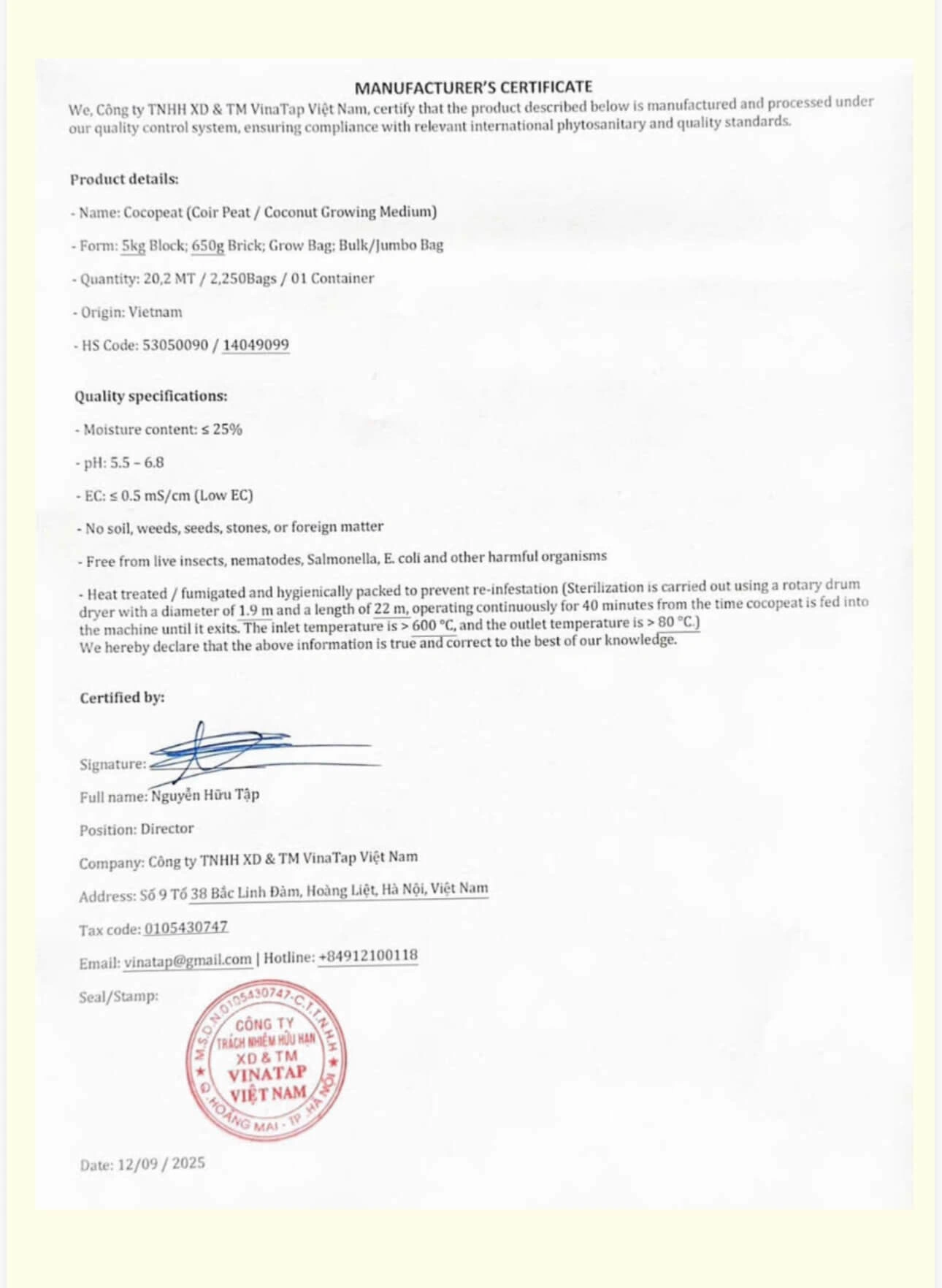
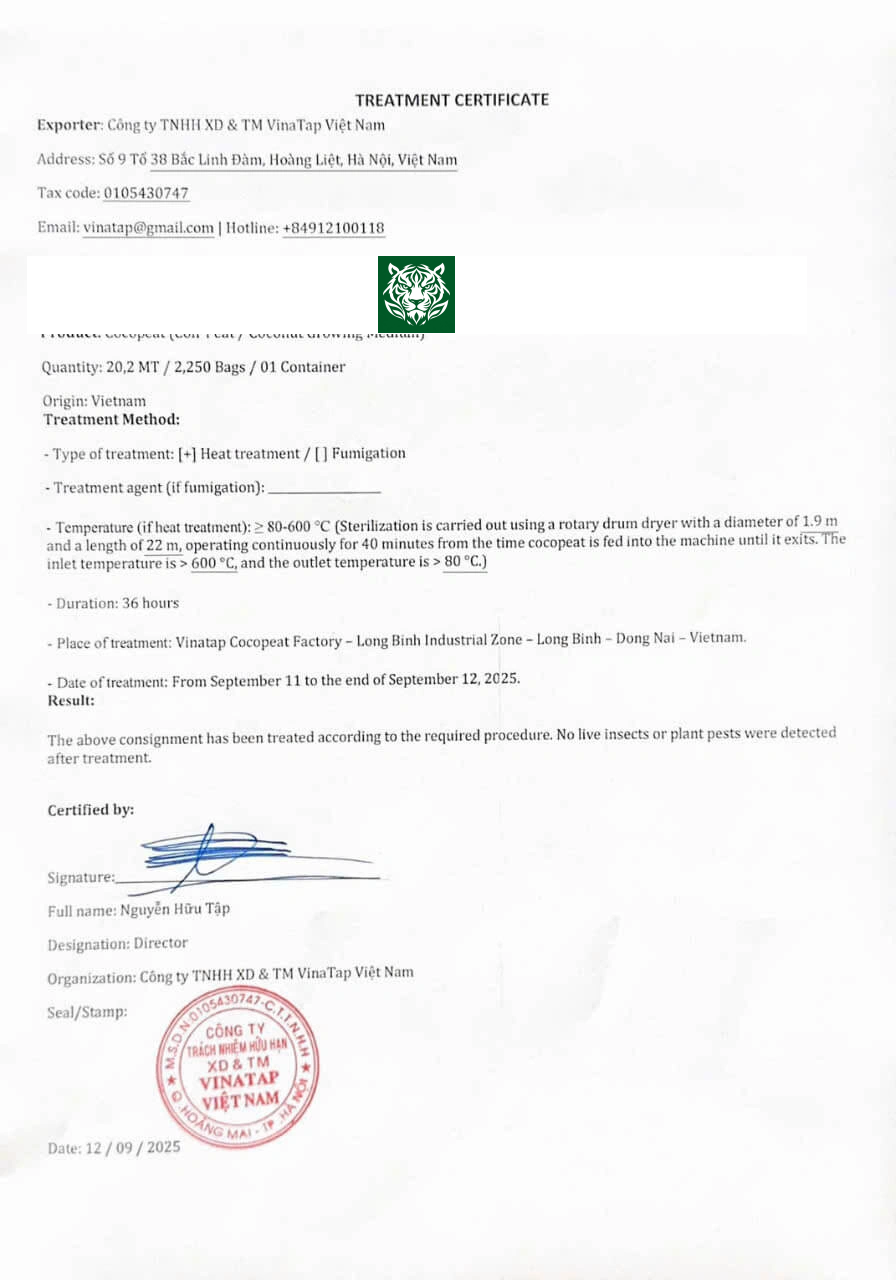
These two documents come from a 2025 shipment produced at our former Bien Hoa factory, and the dryer figures on them describe that line. Production has since moved to Dong Thap, where the stainless-steel rotary drum dryer is 1.6 m in diameter and 22 m long. Its operating readings are 900–1,000 °C at the inlet and 100 °C at the outlet.
Those readings are taken at the dryer, not inside the material. If your clearance option depends on a core temperature and hold time, tell us before production so that the evidence on the certificate matches what your authority will check.
Before you order: a checklist for importers
- New Zealand: choose the clearance option and tell us which one. Australia: confirm the permit conditions for the coir peat case.
- Send the exact wording your authority requires on the manufacturer’s certificate, treatment certificate and phytosanitary certificate.
- State the grade, format and packing. See low EC cocopeat and buffered coco coir.
- Agree the pallets: treated wood or plastic for Australia.
- Allow time for inspection or testing on arrival when you plan delivery.
Rules change. The standards and pages linked here are the authority; this guide is a summary for planning, not a ruling on any consignment. For the documents that travel with every order, see export documents and certifications and test reports.
Common questions
Does coco peat need an import permit for New Zealand?
No. MPI’s import health standard does not require a permit for coco peat. It does require a phytosanitary certificate and one of six clearance options, such as a grow-out test or an approved heat treatment.
Does Australia require an import permit for coir peat?
The Australian department states that an import permit is required for all plant-based fertilisers, potting mixes and soil conditioners, and that coir peat used as a growing medium or fertiliser falls under the BICON coir peat case. If the applicable BICON pathway requires a production questionnaire, the manufacturer completes it for the importer’s application.
What heat treatment does New Zealand accept for coco peat?
Dry heat to a core temperature of at least 110 °C for 16 hours, 121 °C for 2 hours, 154 °C for 30 minutes, 193 °C for 4 minutes or 221 °C for 2 minutes. Moist heat, autoclaving and irradiation at 25 kGy are also accepted.
Ask about a product in this article
We have included this page in your enquiry. Add your product specification, quantity and destination port before sending.