VINATAP JOURNAL
How to Evaluate 5kg Cocopeat Blocks: Moisture, Expansion and Batch Quality
Block weight, dry matter and usable hydrated volume answer different purchasing questions. Build a repeatable acceptance check for compressed cocopeat without confusing a label claim with measured growing-media performance.
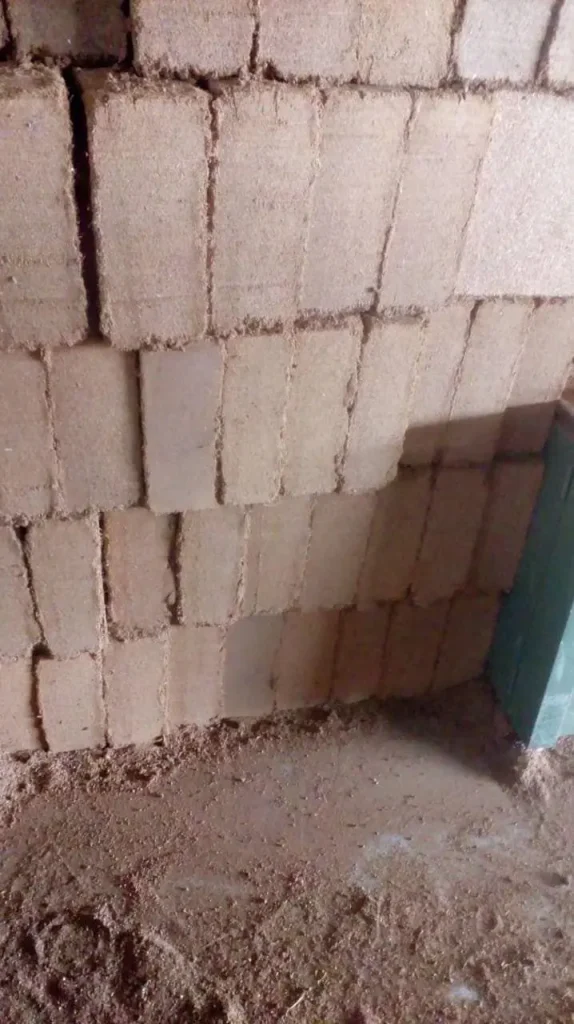
A compressed block is a convenient shipping format. Its weight alone does not describe how much prepared growing medium a nursery will obtain, how uniformly it will hydrate or whether its chemistry matches the crop. Evaluating 5kg cocopeat blocks therefore requires several measurements that remain distinct: received net mass, moisture content, reconstituted quantity, particle structure and chemical condition.
This guide presents a practical buyer-side testing framework. The worked figures are hypothetical examples, not declared VinaTap performance values. Agree the acceptance method and product specification for the actual order before applying a pass-or-fail limit.
Start by defining what “5kg” refers to
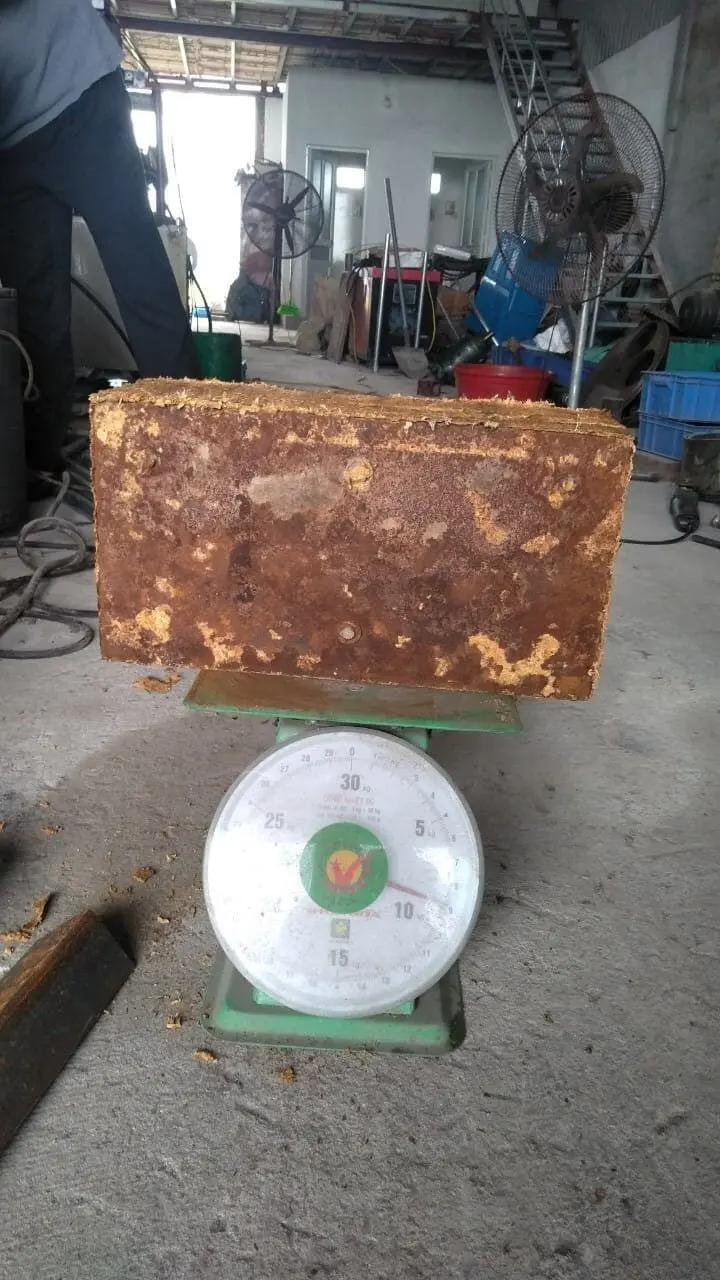
Separate the block’s net material mass from wrapping, labels, straps and pallet tare. Weigh individual samples on a suitable checked scale and record the lot identification. A shipment average can conceal a wider spread among individual blocks, so record the sample count, range and mean rather than one selected result.
Also distinguish the received mass from dry matter. Moisture is part of the received block’s mass. It is not the same measurement as the water retained after hydration, and neither measurement alone establishes crop performance.
Use a stated moisture basis
On a wet-mass basis, moisture percentage equals water mass divided by the sample’s original wet mass, multiplied by 100. Dry-basis moisture instead divides the water mass by dry solids. Both conventions are mathematically valid, but their numerical percentages differ. Ask which basis appears on the certificate.
For laboratory work, request a defined drying and sample-preparation procedure rather than substituting an unvalidated handheld reading. The official EN 13040 catalogue entry identifies sample preparation, dry matter, moisture and laboratory compacted bulk density within its scope. Referencing the standard here does not establish that a particular VinaTap batch has been tested or certified to it.
Worked example: equal received mass, different dry solids
| Hypothetical block | Received net mass | Moisture, wet basis | Calculated dry matter |
|---|---|---|---|
| A | 5.00 kg | 20% | 5.00 × 0.80 = 4.00 kg |
| B | 5.00 kg | 10% | 5.00 × 0.90 = 4.50 kg |
In this example B contains 0.50 kg more dry matter, or 12.5% more than A. That does not prove B is the better growing medium: structure, salt levels and the intended use still matter. It shows why comparing price per received kilogram without a moisture basis can miss an important difference.
Define expanded quantity before testing it
“Expansion” may refer to a block’s change in geometric size, the loose volume of hydrated material, or the amount that fills a production container after normal settling. Ask which meaning the supplier intends. These are related observations, but they are not interchangeable specifications.
BSI describes EN 12580 as a method for quantity determination of growing media, including material reconstituted where necessary. Its scope distinguishes this from plugs, blocks and slabs sold by their dimensions. Have the laboratory select the applicable method for the product and claim; this article is not a replacement for the standard’s full procedure.
Before a comparison, agree the water quality, water additions, equilibration time, breakup process, drainage condition and filling method. A loosely fluffed sample and a firmly packed measuring vessel can give different apparent volumes even when the starting block is identical.
Hydrate consistently instead of chasing the largest bucket reading
Use a clean vessel that allows full reconstitution. Add water in documented stages and check the centre of the material for remaining compressed sections. Apply the same gentle breakup routine to every sample. Record material left unhydrated and any material lost during handling; do not quietly discard an inconvenient fraction before measuring the result.
Schulker and colleagues’ research on substrate water capture shows that hydration responses depend on the substrate and wetting conditions. Their experiment is evidence for controlling the procedure, not a universal water-per-block recipe.
Suppose an agreed test yields 65 litres per block for a hypothetical batch. One hundred blocks would represent 6,500 litres, or 6.5 cubic metres, under that test condition. Filling losses, subsequent settling and production-container handling can change the usable output. Measure those separately instead of assuming that the test-vessel volume equals finished nursery production.
Check structure and chemistry after reconstitution
Look for a consistent distribution of pith, fibres and chips according to the ordered grade. Where size distribution matters, agree a sieve method and report the measured fractions. A photograph of the surface cannot replace a representative sample or describe the entire pore network.
Then test EC and pH by the agreed extraction method. Keep the hydration water record: a poor water source can complicate interpretation of the reconstituted substrate. Our EC testing guide explains why a number without its method cannot resolve a quality dispute.
Turn the trial into a batch acceptance record
- Identify the lot and agree where, when and how blocks will be sampled.
- Record net mass and moisture basis, with the laboratory method where applicable.
- Document reconstitution conditions and the quantity-measurement procedure.
- Keep individual measurements and photographs of any unusual samples.
- Check the ordered structure, EC, pH and any separately required ion analyses.
- Retain a sealed reference sample and agree how an out-of-specification result will be rechecked.
A Technical Data Sheet describes the product specification or typical product information; a batch Certificate of Analysis should identify the tested lot, measured properties and methods. Ask which document supports each acceptance line. Avoid treating a generic brochure as a test result for the shipment in front of you.
For VinaTap 5kg cocopeat blocks, send the application, EC method, required structure and quantity basis with the enquiry. This makes the discussion more precise than asking only for the cheapest compressed block.
Sources and method references
- DIN Media: EN 13040 scope and publication information.
- BSI: EN 12580 quantity-determination scope.
- Schulker et al., 2021: Exploring Substrate Water Capture through Preconditioning and Irrigation Pulsing.
VinaTap block and brick formats
Select the compressed format around the amount you need to prepare and the handling process. Confirm mass, dimensions and tolerances on the order; package shape does not establish washing or buffering status.
- 2 kg block: 30×30×4 cm.
- 2.5 kg block: 30×30×5 cm.
- 5 kg block: 30×30×13 cm.
- 0.3 kg brick: 10×10×5 cm or the confirmed square-format option 14×14×2 cm.
- 0.5 kg brick: 20×10×5 cm or 14×14×5 cm.
- 0.65 kg brick: 20×10×7 cm or 14×14×7 cm.
These are VinaTap’s confirmed format options, not a tolerance statement. Specify which option is required and agree allowed variation for the purchase.
How to prepare a block or brick
- Check the lot label and treatment status. Retain an unopened sample for reference.
- Use a clean container with room for expansion and suitable water. Keep the water source and added volume recorded.
- Add water according to the agreed preparation procedure, allowing it to penetrate the compressed material.
- Loosen gently as expansion progresses and inspect the center for dry compressed areas.
- Apply the agreed draining, loosening and leveling procedure before measuring usable volume.
- Check EC and pH with the specified extraction method before adding crop nutrients where the receiving test requires an unfertilized sample.
Keep three measurements separate
VinaTap has confirmed minimum expansion of 14 L/kg for its dry cocopeat grades and reports that 1 kg absorbs 5 L of water. Water absorbed and expanded substrate volume describe different measurements. The 5 L figure is not a universal one-step hydration instruction, and neither number defines the final water content after draining.
Before using expansion as an acceptance test, agree initial product condition, water inputs, hydration endpoint, drainage, loosening and vessel filling. For a 5 kg nominal unit, 5×14 gives 70 L as an arithmetic reference to the confirmed minimum, subject to the same agreed measurement basis; it is not a separate method-independent test result.
Dry-grade packing moisture below 15% is checked using a dedicated meter. Confirm its measurement basis and procedure; do not directly compare it with a laboratory result expressed on another basis.
Common questions about compressed cocopeat
Must a washed block be buffered again?
Check the confirmed preparation and your water and nutrient program. Do not infer buffering from a Low EC label or add a treatment recipe without the required analysis.
Can I compare liters from differently prepared samples?
Only when the preparation and volume-measurement procedures are comparable. A tightly pressed vessel and a loosely filled vessel do not establish the same usable volume.
Compare VinaTap blocks and smaller cocopeat bricks, review EC test methods, or request a sample and agreed receiving specification.
Why the drying step matters for block and brick purchasing
VinaTap reports a dedicated biomass-fired stainless-steel rotary drying system before dry-product packing, with dry cocopeat moisture below 15%. This gives buyers a defined moisture specification to check alongside unit mass and expanded volume. It does not replace the agreed volume-test procedure or the need to identify the material treatment.
Review the VinaTap washing, optional buffering and rotary drying process and historical SGS and Vinacontrol sample results. Agree current lot testing where it forms part of your order acceptance.
Ask about a product in this article
We have included this page in your enquiry. Add your product specification, quantity and destination port before sending.