VINATAP JOURNAL
Coco Coir for Microgreens: How to Use It and How Much to Buy
How to grow microgreens on coco coir: hydrating, sowing, bottom watering and harvest times, which coir to buy and how many trays a brick or block fills.
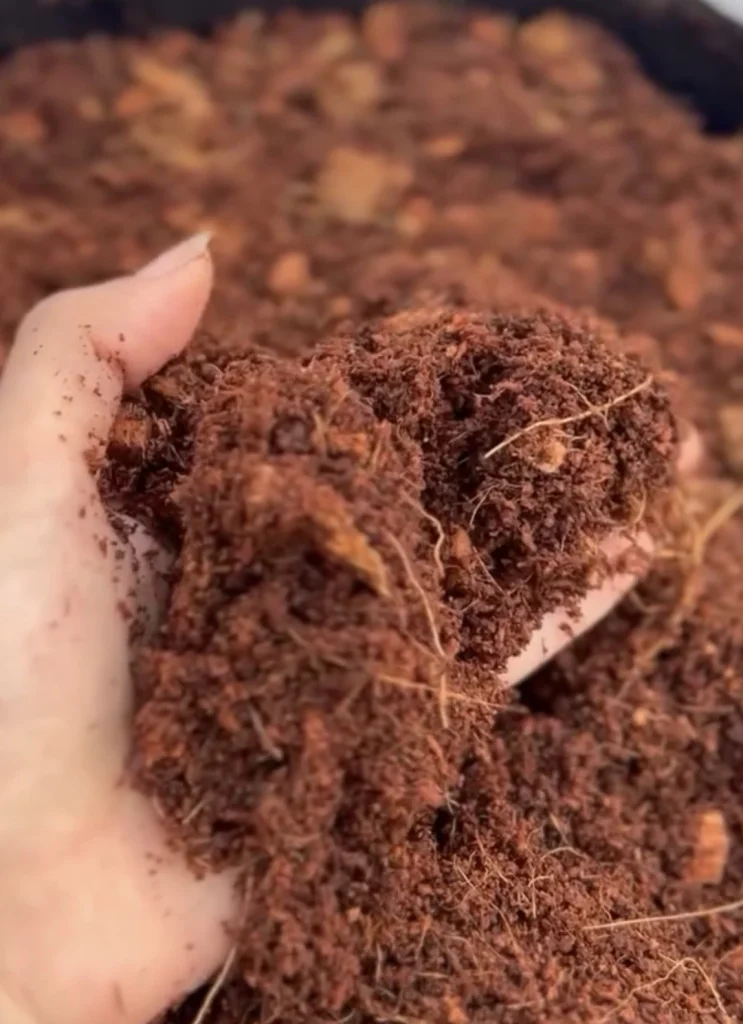
Many microgreens are harvested one to three weeks after sowing, while some varieties take longer. The growing medium should hold water evenly under a dense layer of seed and be handled hygienically. Coco coir does this well, which is why it is one of the three media Utah State University Extension lists for microgreens, alongside seed starting mix and hydroponic grow mats.
How to use coco coir for microgreens
- Hydrate the coir. Soak the brick or block and break it up. Utah State advises moistening coir until it feels like a wrung-out sponge, with no water dripping when squeezed.
- Fill the tray with an even, shallow layer and level it.
- Weigh seed for the variety and tray size. Utah State University Extension gives different rates for a 1020 tray, including 10 g for arugula, 48 g for sunflower and 150 g for peas. Follow crop-specific guidance rather than applying one gram-per-tray rate to every seed.
- Water from below. Both sources recommend bottom watering, which keeps leaves and stems dry and reduces disease. Utah State advises letting the coir take up water from a tray underneath and discarding what is left after 30 minutes.
- Harvest. Penn State gives 7 to 21 days from sowing; Utah State lists about 6–8 days for arugula, 9–10 for sunflower and 21–28 for cilantro.
Fertilizer and hygiene
Penn State notes that little or no fertilizer is needed because the plants are harvested so young. It also advises using new media for each crop to limit disease, and keeping the media out of the harvested product. Damping-off was the only disease its authors met, and it is favored by warm, humid conditions.
Which coir to buy
- Washed, Low EC. Oklahoma State University Extension warns that poorly processed coir can be high in salinity. VinaTap’s washed cocopeat is below 0.4 mS/cm with pH 5.5–6.5, measured on a 1:1.5 extract.
- Fine grade. Fine cocopeat of 0.1–6 mm gives an even seedbed; husk chips are too coarse for this use.
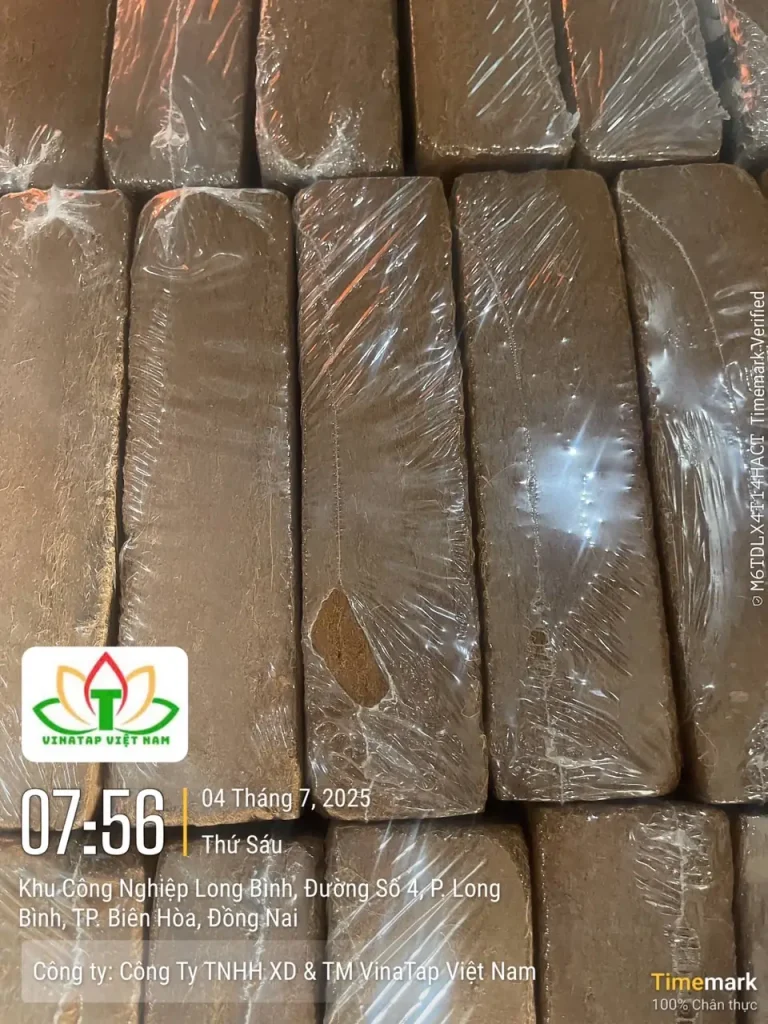
- Compressed for shipping. Bricks and blocks cost least to ship and store; loose bags save the soaking step.
How many trays a brick or block fills
Compressed cocopeat expands to about 14 L per kg. A tray of 25 × 50 cm filled 2.5 cm deep takes about 3 L of coir.
| Format | Expanded volume | Trays at 2.5 cm depth |
|---|---|---|
| 0.65 kg brick | About 9 L | About 3 |
| 1 kg brick | About 14 L | About 4 |
| 5 kg block | About 70 L | About 22 |
Because new media is used for every crop, a microgreens farm uses coir continuously. At the 25 × 50 cm tray size and 2.5 cm depth used in the example, 100 trays require about 313 L before handling losses. At a measured yield of 70 L per 5 kg block, that is approximately 4.5 blocks: plan five blocks plus any allowance established by your filling trial.
Buying for resale or for a farm
VinaTap supplies washed cocopeat as bricks, 5 kg blocks and loose bags by the container, and prints bags with a distributor’s brand; see private label coco coir and bulk coco coir wholesale. For seedlings grown on to transplant size, read coco coir for seed starting.
Ask about a product in this article
We have included this page in your enquiry. Add your product specification, quantity and destination port before sending.