VINATAP JOURNAL
How to Grow Vegetables in Coco Coir: A Practical Guide
Plan vegetable growing in coco coir: select a substrate and bag format, prepare the medium, manage nutrition and irrigation, and keep EC and pH checks comparable.
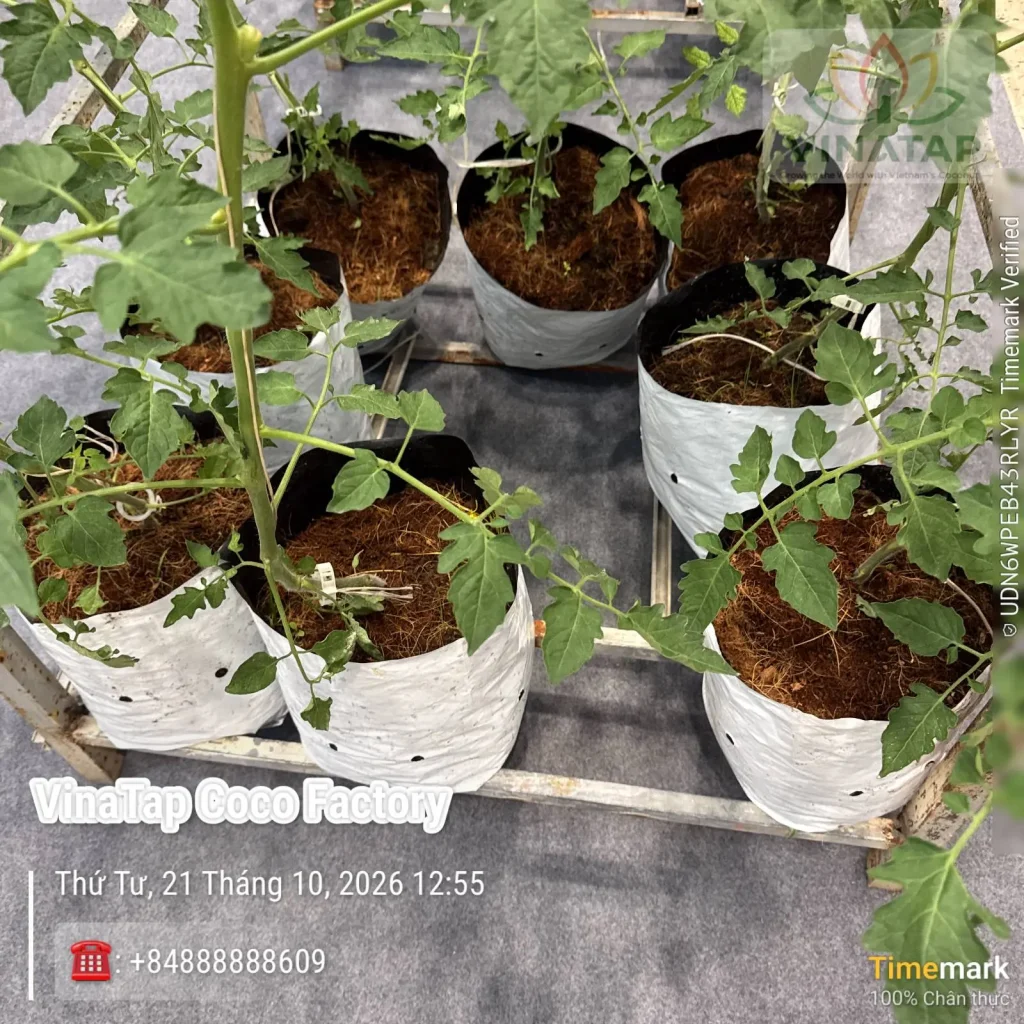
Growing vegetables in coco coir starts with matching the substrate, container, irrigation and nutrient supply. Coir can support a soilless production system, but a bag of coir is not a complete growing plan. This guide helps you prepare a small trial, record the results and specify the product before expanding production.
1. Choose the substrate and delivery format
Coir is made from coconut husks and can be used alone or in a growing-media blend. Its structure varies with processing and particle composition. Oklahoma State University Extension describes coir as a vegetable-growing substrate and stresses the importance of both water retention and drainage.
Start with your crop, container dimensions and irrigation equipment. Evaluate the material after hydration and filling rather than choosing solely by a blend percentage. Compare pith, chip and fiber blends in the container you intend to use.
- Loose bags: consider 50 L / 100 L packing for filling your own pots or containers.
- Compressed blocks: plan a separate hydration and filling step for block formats.
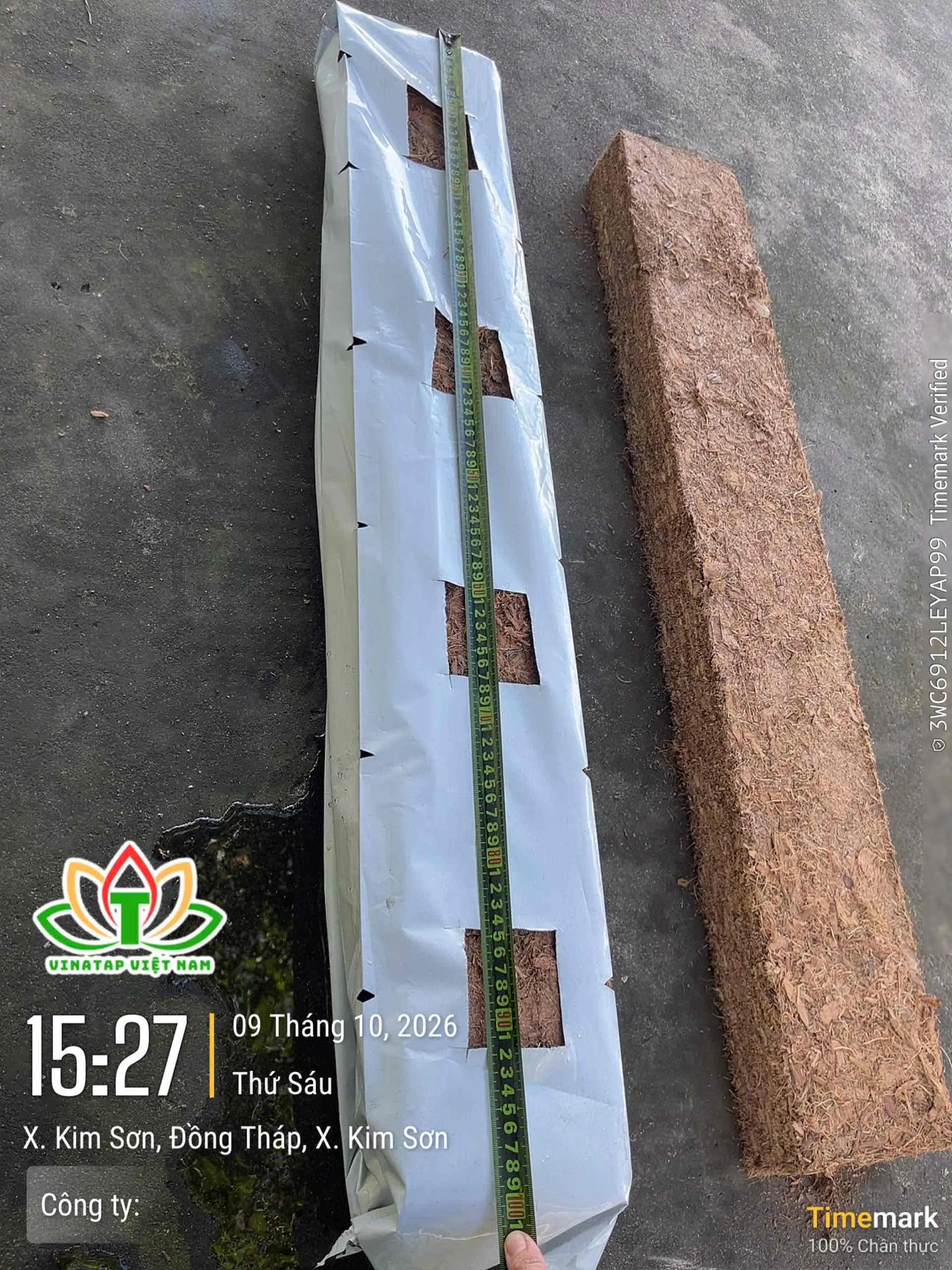
- Grow bags: compare compressed long bags, directly filled long bags and open-top bags; agree growing height, usable volume and openings.
2. Confirm preparation before planting
Check whether the product arrives dry and compressed, already filled or as a prepared blend. Compressed coir requires hydration; follow the instructions agreed for the selected product, allow expansion space and check for dry sections before filling. OSU notes that compressed coir is rehydrated before use; the expansion achieved depends on the product.
Ask which washing and buffering treatments were included. Review the washing and buffering guide and request the relevant product test information. Agree a sample preparation and EC test procedure before deciding whether additional preparation is needed. Drainage-water EC is not automatically interchangeable with a supplier extraction result.
3. Plan nutrition and water quality
Confirm whether the selected blend contains a starter fertilizer. In a soilless vegetable system, nutrient supply must be planned for the crop and growth stage. The New England Vegetable Management Guide recommends media testing, water-quality assessment and attention to fertilizer composition, including calcium and magnesium.
Use a fertilizer intended for the chosen growing system, following its label and crop guidance. Check the irrigation-water analysis and the complete formulation before adding supplements. A buffer treatment is a substrate-preparation detail; it does not replace the crop nutrition program.
4. Establish plants and check the irrigation layout
Prepare a small, labelled trial using the same bag or container, substrate batch and irrigation layout planned for production. Follow the seed supplier or nursery instructions for sowing depth, transplant stage and spacing. Record those choices with the substrate specification.
Before planting the full area, check that each container drains and that emitters deliver water to the intended root-zone position. Plan supports and access around your crop layout. For commercial greenhouse systems, UF/IFAS describes drip fertigation in coir bags; the crop and system determine the detailed setup.
5. Adjust watering from observations
A fixed number of irrigations per day cannot describe every coir system. UF/IFAS water and nutrient guidance relates irrigation management to substrate properties, plant demand and growing conditions. Use that principle to develop and review your own schedule rather than copying a frequency from a different crop or greenhouse.
Keep a simple trial log:
- Substrate batch, container or bag dimensions and planting date.
- Emitter output, irrigation duration and total volume applied.
- Observed moisture change between irrigations and collected drainage.
- Input solution and root-zone or drainage tests, with the sampling method.
- Plant observations and any change made to the program.
Read the dryback and drainage guide for the measurement discussion.
6. Keep EC and pH measurements comparable
Record the extraction procedure with each result. The New England guide explains that saturated-media extract, dilution and PourThru results are not directly interchangeable. Use interpretation guidance for the method and crop being assessed, and keep sampling consistent across the trial.
VinaTap’s washed Low EC product reference is below 0.4 mS/cm at a 1:1 cocopeat-to-water volume ratio. This is a product specification, not the target EC of a fertilized root zone during crop production. See the EC specification guide.
Prepare your vegetable-growing substrate enquiry
Send VinaTap the crop, growing system, container or bag dimensions, requested volume, blend, washing or buffering requirement, and quantity. Include available irrigation-water information, planting and drainage-hole requirements, packing preference and destination port.
Discuss Coco Coir for Your Growing System
Common questions
Can I use the same blend for every vegetable?
Evaluate the blend in the intended container and irrigation system. Record the crop, growth stage and trial conditions before using the result to specify a larger order.
Does Low EC mean the crop needs no fertilizer?
No. The supplied substrate EC and the crop nutrition program are different matters. Confirm starter nutrients, irrigation water and the fertilizer formulation.
Are all grow bags delivered compressed?
No. VinaTap offers compressed long bags, uncompressed directly filled long bags and open-top formats in compressed or uncompressed form. Specify delivery form and finished growing dimensions separately.
Ask about a product in this article
We have included this page in your enquiry. Add your product specification, quantity and destination port before sending.