VINATAP JOURNAL
Coco Grow Bags for Commercial Melons: Specifications and Supplier Evaluation
Specify coco grow bags for melons: filled dimensions, planting and drainage layout, washed or buffered substrates, sample approval and container packing.
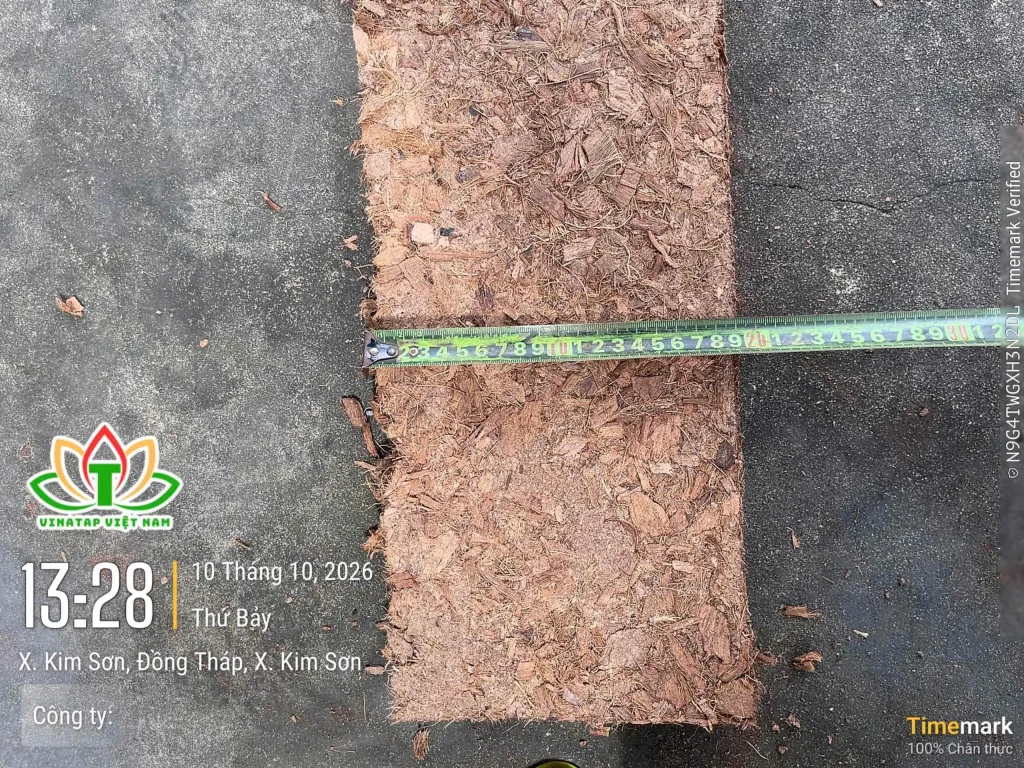
Commercial buyers of coco grow bags for melons need a bag and substrate specification that matches their trellised or supported growing system. Define the intended crop cycle, plant arrangement and receiving workflow before comparing container prices. VinaTap manufactures custom coir formats for commercial projects and wholesale distribution.
Turn your layout into a bag drawing
Provide the desired growing length, width and height, planting positions, emitter positions and drain-hole requirements. Mark which dimensions apply after hydration or filling. Include the support surface and drainage-collection arrangement so openings can be checked in their working position.
VinaTap’s long-bag manufacturing options include 100 cm length, widths of 12, 15, 18, 20, 25 or 30 cm and growing heights within 10–30 cm. These options do not establish a recommended plant count for every melon cultivar or climate. Approve the format against your growing plan.
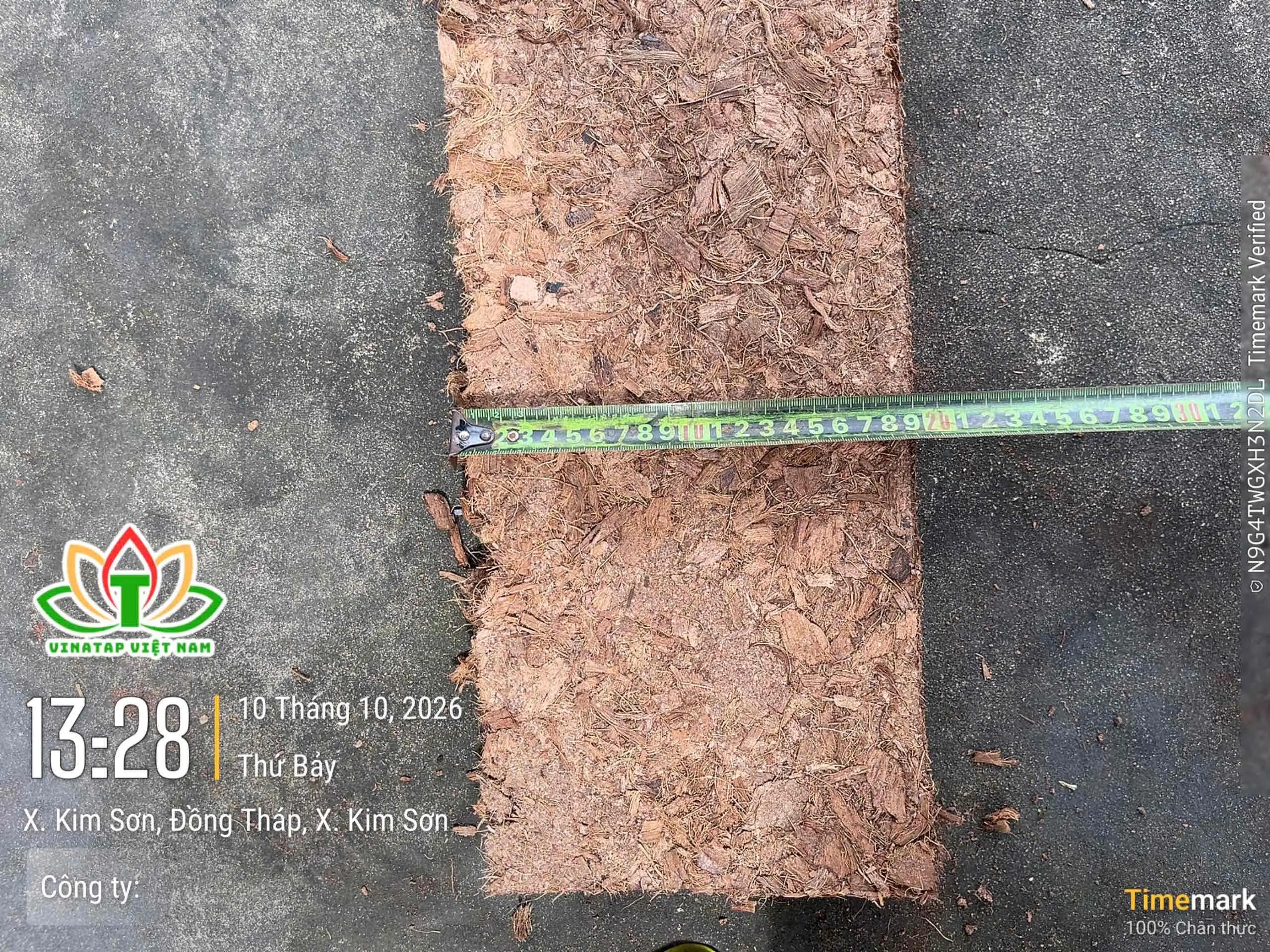
Compare compressed and direct-filled delivery
Compressed bags require space, water and staff time for preparation. Direct-filled long bags are supplied in an agreed condition and can have planting and drainage openings prepared to the buyer’s drawing. Compare preparation work and actual receiving costs alongside the unit quotation.
Specify usable substrate volume and its measurement procedure. Do not infer volume from sleeve dimensions alone or apply dry-product moisture limits to a moist direct-filled format.
Match the substrate trial to the production system
Agree the peat/chip/fiber structure, washing or buffering, EC and pH extraction methods and any starter charge. VinaTap’s Low EC cocopeat limit is below 0.4 mS/cm at a 1:1 volume extraction. It is an incoming-material test, separate from the fertilized growing medium.
UF/IFAS describes soilless bag systems used for crops including melons, while its greenhouse production systems guide discusses bag placement and drainage collection. Use these principles to frame your evaluation; management settings should be established for your own project.
VinaTap washing, optional buffering and rotary drying
Specify processing separately from bag size. VinaTap washes Low EC cocopeat and offers calcium nitrate and magnesium buffering when requested. Its dry-product route includes a biomass-fired stainless-steel rotary drum, 1.6 m in diameter and 22 m long. Dry cocopeat and coco chips have a confirmed packing-moisture specification below 15%.
The reported 900–1,000°C inlet and 100°C outlet readings describe system measurement points. They are not measured temperatures throughout every substrate particle. See the production process and sample-specific SGS and Vinacontrol results for the evidence buyers can review.
Approve samples with a written checklist
- Confirm sample identity, formulation and treatment.
- Check compressed mass and dimensions where applicable, then prepare consistently.
- Measure final growing dimensions and usable volume across several units.
- Check bag seals, hole positions, wetting uniformity and clear drainage.
- Run a limited melon trial with recorded inputs and a reference substrate.
- Approve permitted variation and the receiving/recheck procedure before container production.
Container supply for international melon projects
VinaTap reports existing overseas coir buyers in markets including Greece, Spain, Mexico, the United States, Japan, South Korea and China, with additional European, Australian, New Zealand and Arab-market destinations. Confirm the exact country and port in your enquiry.
For custom grow bags, VinaTap’s stated starting MOQ is one 20 ft container, from 2,500 pieces; confirm the final count and loading plan for the selected format. Historical 40HC grow bag shipments have ranged from 8,000–12,000 pieces depending on dimensions. Request the actual packing list rather than applying one count to every size.
Approve pallet dimensions, bag or carton marking, net/gross mass and document requirements for the selected order. Shipment examples do not replace destination-specific import checks.
Organic-program documentation: Mekong Coco, VTV-21141
VinaTap’s historical OMRI certificate identifies Mekong Coco, product code VTV-21141, in the NOP Coconut Fiber category. The copy on file shows a listing date of 25 February 2025 and an expiration date of 1 March 2026.
Use this as a historical document reference and request current listing evidence for the exact product and formulation before organic-program purchasing. Verify applicability with your certifier and the current OMRI lists. OMRI listing is product-specific; it does not establish organic certification of a farm, current approval of every custom blend, or acceptance under every country’s organic program.
Send a complete melon grow bag enquiry
Include your layout drawing, final bag dimensions, planting/drain openings, substrate composition, treatment, test methods, sample criteria, quantity, destination port and delivery window. See grow bag formats, custom substrates and shipment-document information.
Request Samples & a Bulk Quote
Send your buying brief to vinatap@gmail.com, including destination country and port, quantity, specification and intended delivery window. Sample availability, freight, production timing and commercial terms are confirmed in the quotation.
Ask about a product in this article
We have included this page in your enquiry. Add your product specification, quantity and destination port before sending.