VINATAP JOURNAL
Coco Grow Bag Types: Compressed Slabs, Direct-Filled Bags and Open-Top Bags
Compare coco grow bag types: compressed slabs, direct-filled bags and open-top bags. Plan dimensions, hydration, drainage, planting holes and trial checks.
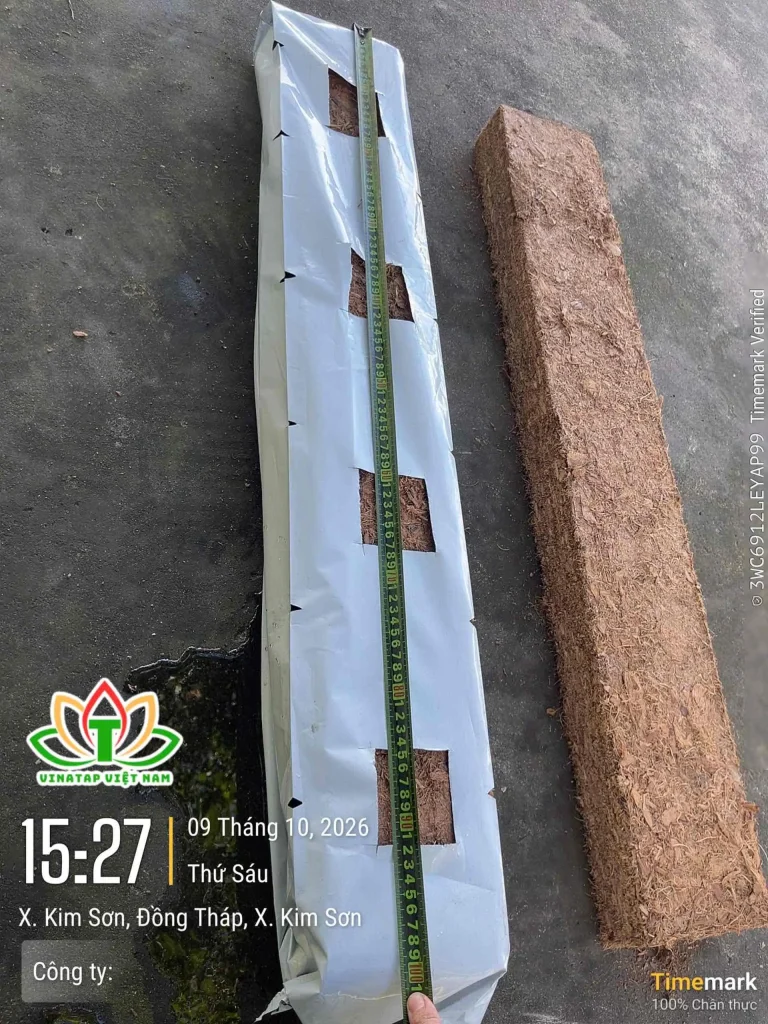
Choosing between coco grow bag types starts with the growing system and preparation work available at your farm. Compare the delivery format, actual growing dimensions, substrate recipe and irrigation layout together. A nominal bag name alone does not define the root zone.
1. Compressed long grow bags
A dry compressed slab is placed inside the growing sleeve and expanded before planting. Plan clean water, space for hydration and time to check uniform expansion. Verify the final filled dimensions rather than treating compressed slab dimensions as growing dimensions.
VinaTap offers long formats around 100 cm in length, with requested widths of 12, 15, 18, 20, 25 or 30 cm. Growing height can be customized from 10–30 cm. Confirm whether each quoted dimension refers to the sleeve, compressed product or expanded substrate.
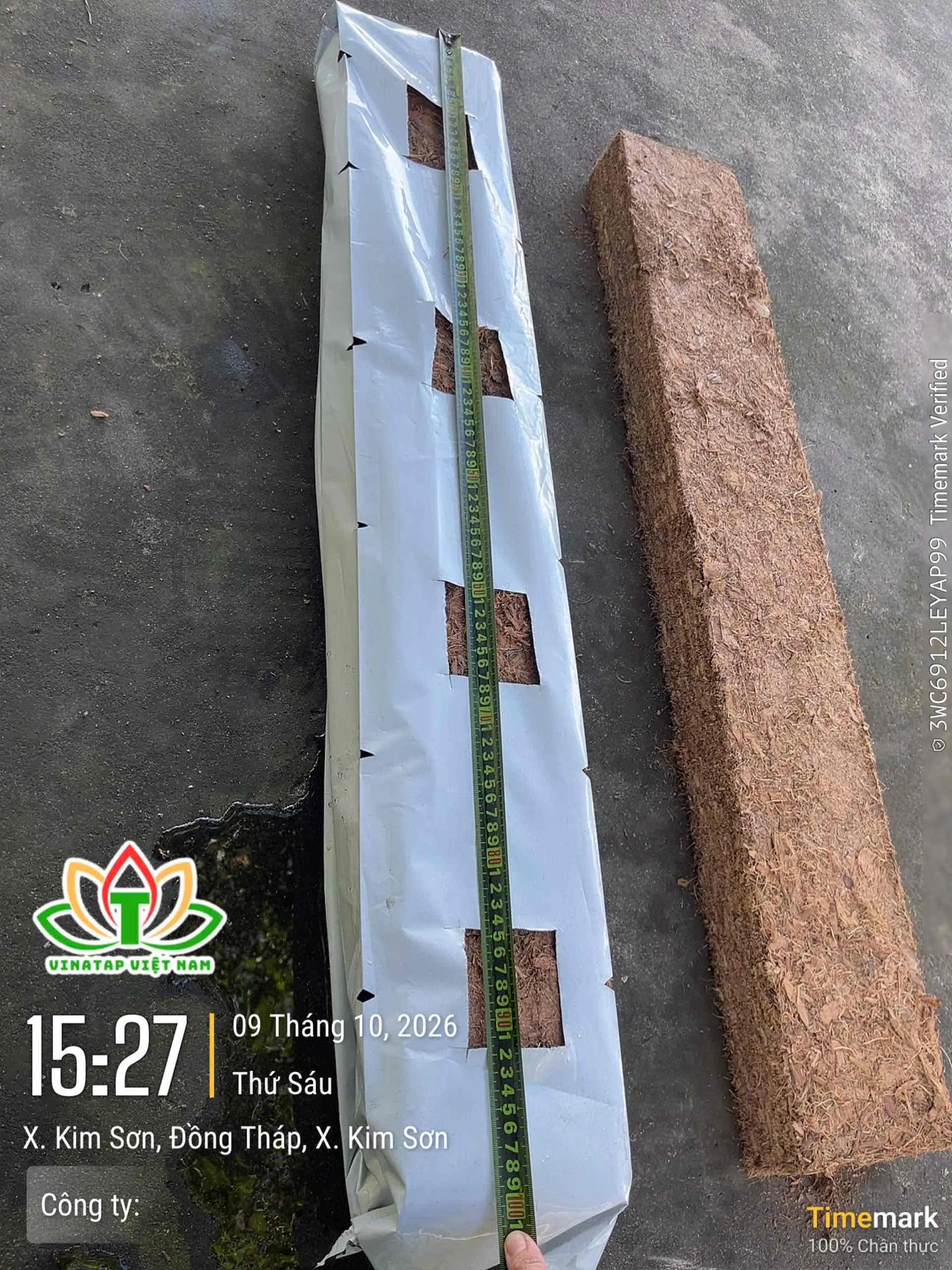
2. Direct-filled long grow bags
The substrate blend is filled directly into the sleeve, which is sealed. Planting openings and drainage holes can be prepared to the buyer’s layout. These bags reduce expansion work at the growing site, but the moisture condition, filled volume and handling weight must be agreed before shipment.
The long-bag width options are also 12–30 cm, with custom sizes discussed for the crop and growing system. Do not copy the dry compressed cocopeat moisture specification into a direct-filled order.
3. Open-top growing bags
Open-top bags are available in compressed and uncompressed forms. Discuss nominal sizes such as 1, 2, 3 or 5 gallon and confirm actual dimensions and volume separately. VinaTap’s requested footprint options include 14×14, 18×18, 24×18 and 30×30 cm, with growing height selected within 10–30 cm.
For directly filled open-top bags, VinaTap can prepare moist substrate at approximately 30% moisture as requested. Agree the measurement basis, tolerance and condition at delivery. This is a separate product condition from the below-15% packing moisture of dry cocopeat grades.
Choose the substrate as well as the bag
Specify peat, chips and fiber requirements; washed or buffered preparation; EC and pH methods; and any starter nutrient charge. The substrate blend and the bag format are separate order decisions.
Container geometry affects water and air distribution. Oklahoma State’s growing-media guidance describes the need to provide water, oxygen and root support. Use the production bag in your trial instead of assuming results from another container will transfer unchanged.
Before planting: a practical checklist
- Confirm lot identity, treatment and the agreed product condition.
- For compressed bags, hydrate according to the agreed preparation instructions and check for dry areas.
- Measure growing dimensions after preparation and record variation between bags.
- Check that planting openings match plant spacing and that emitters wet the intended root zone.
- Keep drainage openings clear; avoid bags standing in collected runoff.
- Record irrigation delivery, drainage and comparable EC/pH results during a small crop trial.
Set irrigation from crop, weather, water quality and observed substrate moisture. Follow the separate coir irrigation guide rather than applying one fixed daily watering schedule.
What to include in a grow bag quotation request
Send crop and growing system, compressed or direct-filled format, final length/width/height, substrate composition, treatment, planting and drain-hole drawing, quantities, packing and destination. VinaTap’s stated starting MOQ is one 20 ft container, from 2,500 pieces; final quantity and loading depend on the requested format.
Common questions
Does a gallon label establish exact dimensions?
No. Confirm the nominal-volume convention, actual fill volume and final dimensions on the specification.
Can bag dimensions and openings be customized?
Yes, discuss the required layout with VinaTap and approve a sample specification before ordering.
Compare the three VinaTap grow bag formats or request a custom grow bag quotation.
Confirm processing before choosing the growing-bag format
VinaTap offers washed material and calcium–magnesium buffering when requested, with a separate mechanical drying stage for dry coir products. Dry cocopeat and chips are specified below 15% packing moisture. Direct-filled moist bags follow their own agreed condition, so the dry specification should not be copied onto every growing-bag order.
Review the VinaTap washing, optional buffering and rotary drying process and historical SGS and Vinacontrol sample results. Agree current lot testing where it forms part of your order acceptance.
Ask about a product in this article
We have included this page in your enquiry. Add your product specification, quantity and destination port before sending.