
Product specifications
Final specifications are agreed for the selected product and order.
| Loose volume per bale | 12,000 L (240 cm bale); 10,000 L (220 cm bale) |
|---|---|
| Bale weight | 12,000 L bale: about 1,500 kg standard, 1,200 kg dried. 10,000 L bale: about 2,000 kg standard, 1,000 kg dried |
| Bale size | 40 HC: 125 × 110 × 240 cm; 20 ft: 125 × 110 × 220 cm; plus a 15 cm pallet |
| Moisture | Standard: 50–60% after dewatering; dried: 15–20% |
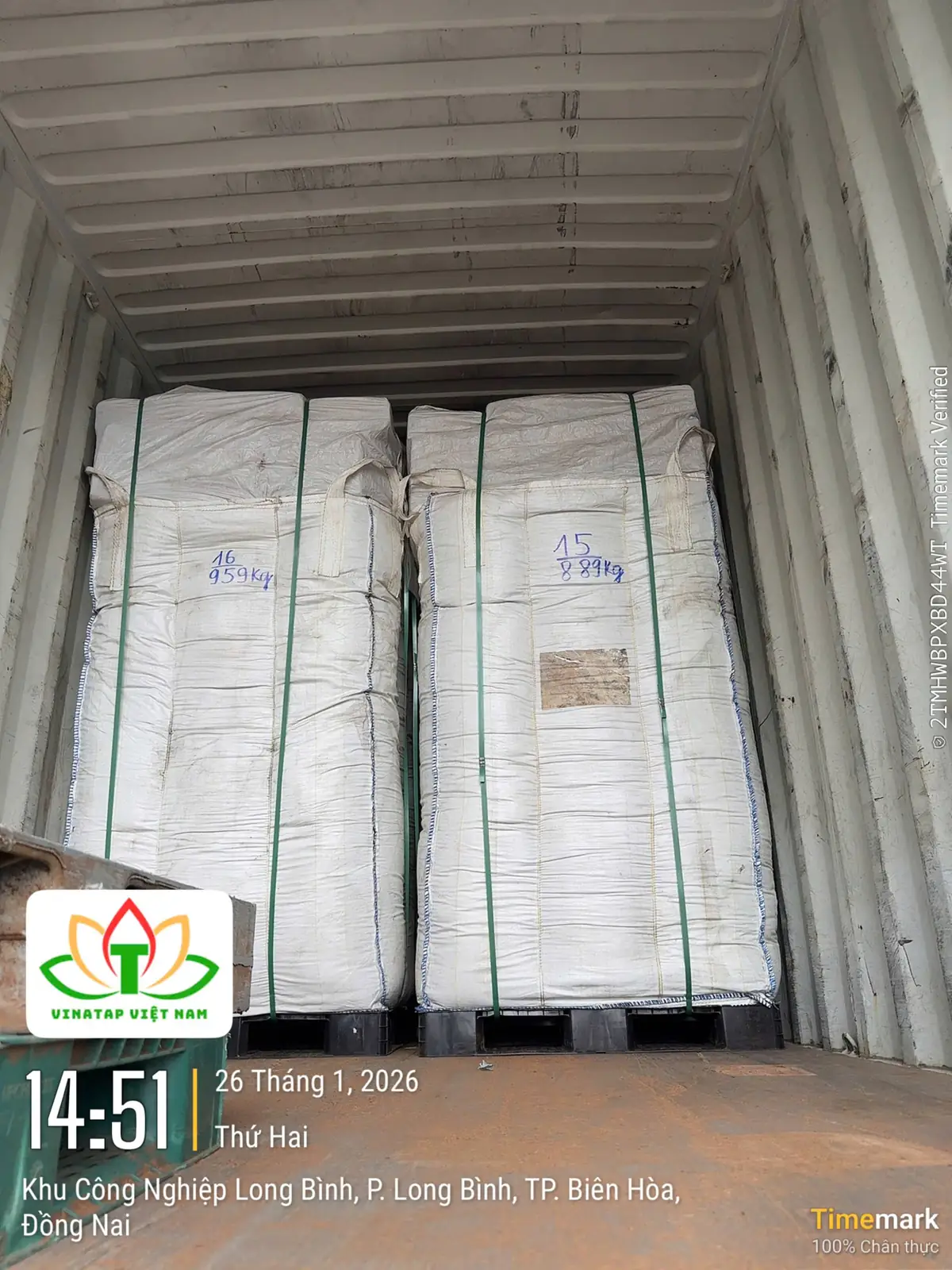
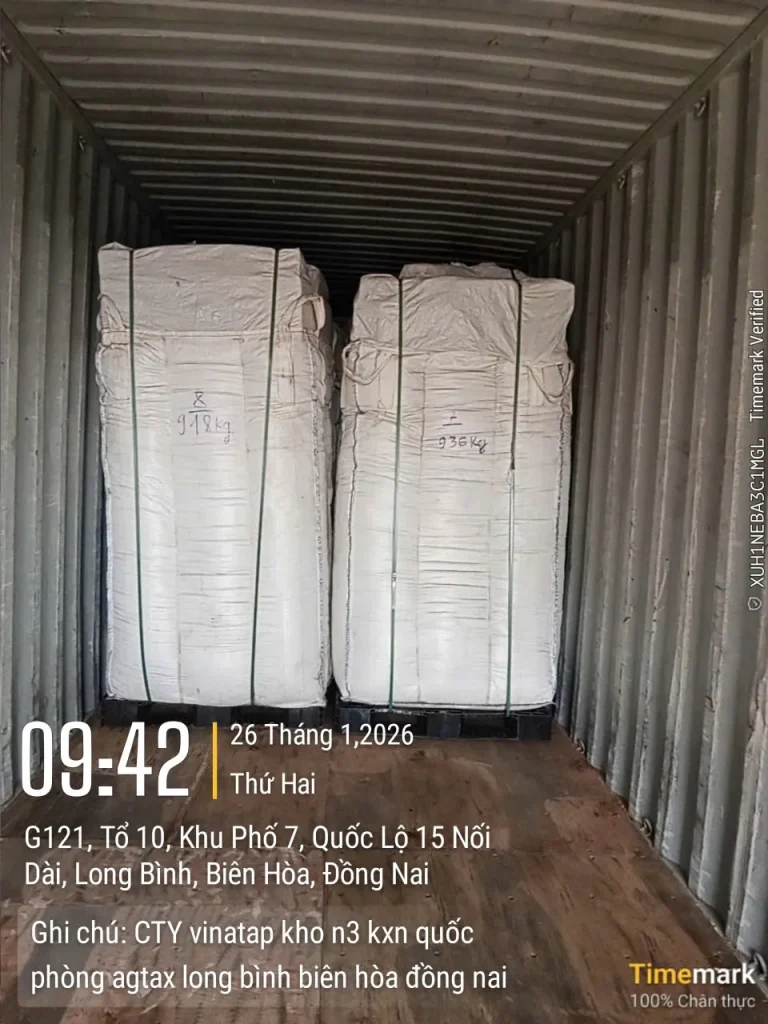
| Packing | White PE bag, UV-protected outside and black inside; one bale per pallet |
| Container load | 40 HC: 18 bales of 12,000 L; 20 ft: 8 bales of 10,000 L |
What a cocopeat big bale is
A big bale is loose cocopeat or coco husk chips compressed into one pallet-sized unit. Each bale is wrapped in a PE bag that is white and UV-protected on the outside and black on the inside, and stands on its own pallet.
The format suits growing-media producers and large growers who handle material by forklift and open it at a mixing line. For smaller units, compare 5 kg blocks, loose bags of 10 to 200 L and jumbo bags.
Bale sizes and container loads
| Detail | 40 HC container | 20 ft container |
|---|---|---|
| Bale size | 125 × 110 × 240 cm | 125 × 110 × 220 cm |
| Pallet height | 15 cm | 15 cm |
| Loose volume per bale | 12,000 L | 10,000 L |
| Bales per container | 18 | 8 |
| Loose volume per container | 216 m³ | 80 m³ |
The litres are the loose volume of the material before it is compressed into the bale. Loose volume per container is the number of bales multiplied by the volume of one bale.
Moisture and bale weight
| Bale | Standard, not dried (50–60% moisture) | Dried (15–20% moisture) |
|---|---|---|
| 12,000 L | About 1,500 kg | About 1,200 kg |
| 10,000 L | About 2,000 kg | About 1,000 kg |
A 40 HC container with 18 bales of 12,000 L carries about 27 tons of standard bales or about 21.6 tons of dried bales. A 20 ft container with 8 bales of 10,000 L carries about 16 tons of standard bales or about 8 tons of dried bales.
State the moisture you need in your enquiry.
Big bales or 5 kg blocks?
Blocks carry more substrate per container. A 40 HC of 5 kg blocks holds 23.5–24 tons, which expands to at least 322 m³ after hydration. A 40 HC of big bales holds 216 m³ of loose volume.
Big bales reduce the number of units to handle. One 12,000 L bale holds the loose volume of about 160–170 blocks, since a 5 kg block expands to 70–75 L.
Blocks arrive dry and need water to expand. A standard big bale arrives at 50–60% moisture.
Material and grade
Big bales are packed with cocopeat or coco husk chips. Agree the grade for your order: washed low EC, buffered or unwashed, with the EC limit measured on a 1:1.5 extract by volume. For a mix of pith, chips and fiber, see custom coco substrates.
Request a big bale quotation
- Material: cocopeat, husk chips or a blend, and the chip size if chips are included.
- Grade: washed low EC, buffered or unwashed, with your EC limit and test method.
- Moisture: standard 50–60% or dried to 15–20%.
- Quantity: number of 40 HC or 20 ft containers.
- Shipment: destination port and FOB or CIF basis.
Reference prices for cocopeat grades are on the cocopeat price page. Big bales are priced on request.
Request a quote for this product
We have included this page in your enquiry. Add your product specification, quantity and destination port before sending.
Frequently asked questions
How many big bales fit in a 40 HC container?
A 40 HC container carries 18 bales of 12,000 L each, which is 216 m³ of loose volume. A 20 ft container carries 8 bales of 10,000 L.
What is a cocopeat big bale wrapped in?
A PE bag that is white and UV-protected on the outside and black on the inside. Each bale stands on its own pallet, which is 15 cm high.
How heavy is a cocopeat big bale?
A 12,000 L bale weighs about 1,500 kg at the standard 50–60% moisture and about 1,200 kg when dried to 15–20%. A 10,000 L bale weighs about 2,000 kg standard and about 1,000 kg dried. The weight for your order is confirmed in the quotation.